
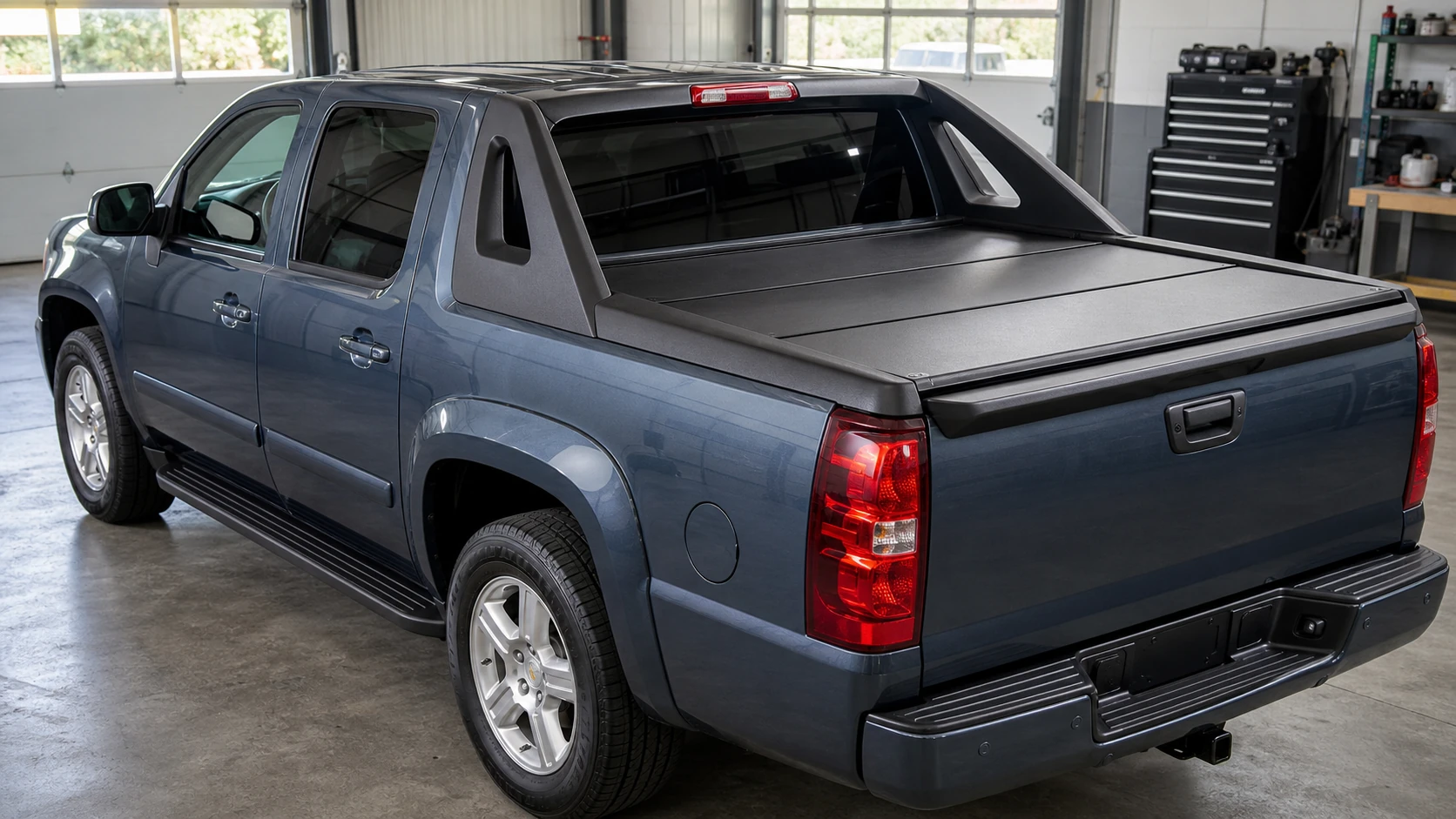
The Chevrolet Avalanche is not a conventional pickup with a separate cab and box. Its Midgate, sail panels, short integrated bed, factory storage compartments, and tailgate geometry make fitment unusually specific. A cover advertised for a Silverado with a similar-looking bed length is not automatically compatible. The safest starting point is the exact vehicle application and manufacturer part number, not a generic width measurement.
For most owners, the real choice is between a hard-folding cover that prioritizes cargo security and a soft roll-up cover that is lighter, less expensive, and easier to remove. This guide compares two current, model-specific options: the BAKFlip F1 772108 and TruXedo Lo Pro 561101. Both are listed for the Avalanche’s approximately 5-foot-3-inch bed, but they solve different problems.
Quick comparison
| Cover | Verified application | Construction | Best for | Main trade-off |
|---|---|---|---|---|
|
BAKFlip F1 772108 View on the retailer |
2002-2013 Chevrolet Avalanche and Cadillac Escalade EXT, 5’3″ bed | Hard-folding FRP top panels with aluminum structure | Security, all-season use, and a rigid load surface | Higher price and more hardware to align correctly |
|
TruXedo Lo Pro 561101 View on the retailer |
2002-2013 Chevrolet Avalanche, 5’3″ bed | Low-profile vinyl roll-up cover with aluminum rails | Lower weight, quick full-bed access, and simpler removal | Soft material provides less forced-entry resistance |
Availability, seller, price, and included hardware can change. Confirm the part number and use the retailer’s vehicle-fitment selector before ordering. As an the retailer Associate, this site may earn from qualifying purchases.
What makes Avalanche fitment different?
The Avalanche bed is integrated into the body and framed by sail panels. The cover rails, clamps, drain tubes, and tailgate seal therefore need to match that body rather than a generic full-size pickup bed. BAK’s own installation documentation identifies a separate Avalanche/Escalade EXT application, and current listings use part number 772108 for the F1. TruXedo likewise lists 561101 as the Lo Pro application for the 2002-2013 Avalanche.
Before buying, verify the year, model, and whether the truck still has its original bed-rail trim and factory hardware. Previous collision repairs, aftermarket caps, rail damage, or missing Midgate seals can affect how a new cover sits. A cover can be the correct catalog application and still leak or latch poorly if the mounting surface is bent or incomplete.
Pre-purchase fitment checklist
- Confirm the listing names the Chevrolet Avalanche, not only Silverado or Sierra.
- Match the manufacturer part number: 772108 for the BAKFlip F1 or 561101 for the TruXedo Lo Pro.
- Inspect the bed rails, sail-panel trim, tailgate cap, Midgate seal, and factory storage lids.
- Check that the kit includes the application-specific rails, clamps, seals, drain tubes, and instructions.
- Ask the seller whether the product is new and warranty-eligible. Manufacturer warranties generally apply to the original purchaser and may depend on an authorized seller.
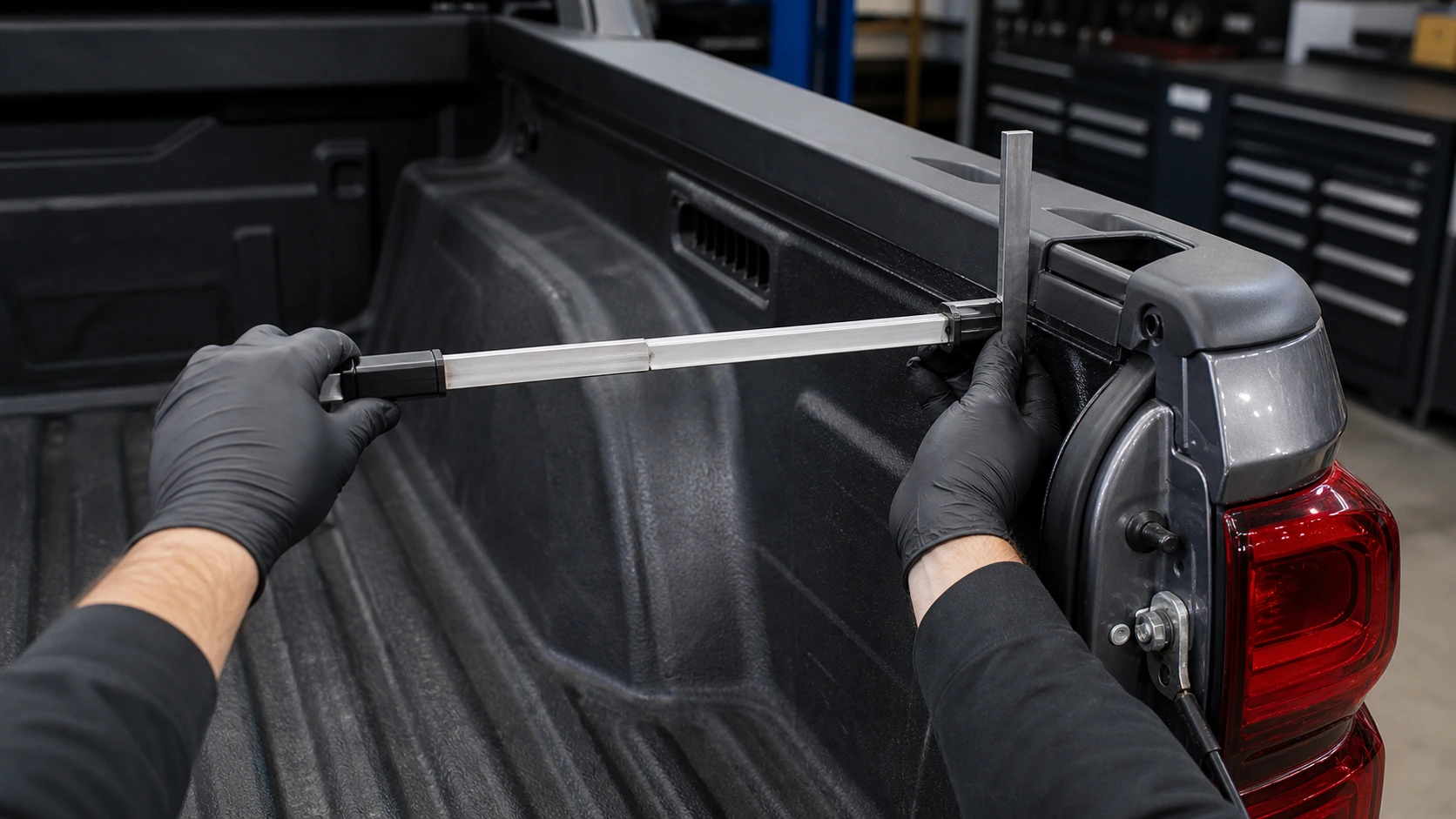
BAKFlip F1 772108: best rigid cover for cargo security
The BAKFlip F1 is the stronger choice when the truck frequently carries tools, luggage, recovery gear, or other cargo that benefits from a rigid barrier. Its top surface uses fiberglass-reinforced polymer over an aluminum structure. The panels fold toward the cab, and the rail system channels water toward drain tubes at the front of the bed.
Current product documentation lists the 772108 for the 2002-2013 Avalanche and Escalade EXT. The cover is designed to sit low on the rails, latch as the panels close, and provide large-bed access without removing the entire assembly. BAK currently backs the F1 with a five-year limited warranty when purchased and installed under the applicable terms.
Where the F1 works well
- Security: rigid panels are more resistant to casual cutting than vinyl. The system relies on the locked tailgate to restrict access to the release cables.
- Weather management: perimeter seals and drain tubes help direct water away from the bed. No tonneau should be described as completely waterproof; small amounts of water can enter around the tailgate or damaged seals.
- Daily access: individual sections can be folded as needed. This is useful when the bed alternates between protected cargo and taller loads.
- Surface durability: the FRP top is intended to tolerate sun exposure, scuffs, and routine outdoor use better than an inexpensive soft cover.
What to check before ordering
The F1 is heavier and less forgiving of installation errors than a roll-up cover. Rails must sit level and parallel, seals should not be pinched, and the drain tubes need a clear path. An incorrectly positioned rail can make the panels difficult to latch or cause the tailgate seal to bind. Owners should also verify the current box contents instead of assuming that used or open-box listings include every Avalanche-specific bracket.
TruXedo Lo Pro 561101: best lightweight roll-up option
The Lo Pro is a better fit for owners who value quick access and low weight more than rigid-panel security. Part number 561101 is currently listed for the 2002-2013 Avalanche with the 5’3″ bed. The rails mount inside the bed, and the vinyl rolls toward the cab for nearly unobstructed cargo access.
Its automatic tension system is designed to keep the material taut as temperatures change, while hook-and-loop strips secure the sides. The cover releases from a trigger latch and can be removed without tools after the initial rail installation. TruXedo currently lists a limited lifetime warranty for a new Lo Pro purchased through an authorized seller, subject to its warranty terms.
Where the Lo Pro works well
- Full-bed access: rolling the cover forward leaves the bed opening largely unobstructed.
- Low-profile appearance: the rails sit inside the bed, keeping the cover close to the factory body line.
- Lower installed weight: a vinyl roll-up assembly is easier to remove and store than a multi-panel hard cover.
- Straightforward maintenance: the surface can be cleaned with mild soap, water, and a soft cloth. Petroleum solvents and abrasive brushes should be avoided.
What to check before ordering
A soft cover is not the same security solution as a rigid cover. It conceals cargo and deters casual access when the tailgate is locked, but the vinyl can be cut. The material and side seals also need periodic inspection for tension, abrasion, and weathering. If the truck spends most nights outdoors with expensive equipment in the bed, the BAKFlip F1 is the more appropriate direction.
Installation notes that matter
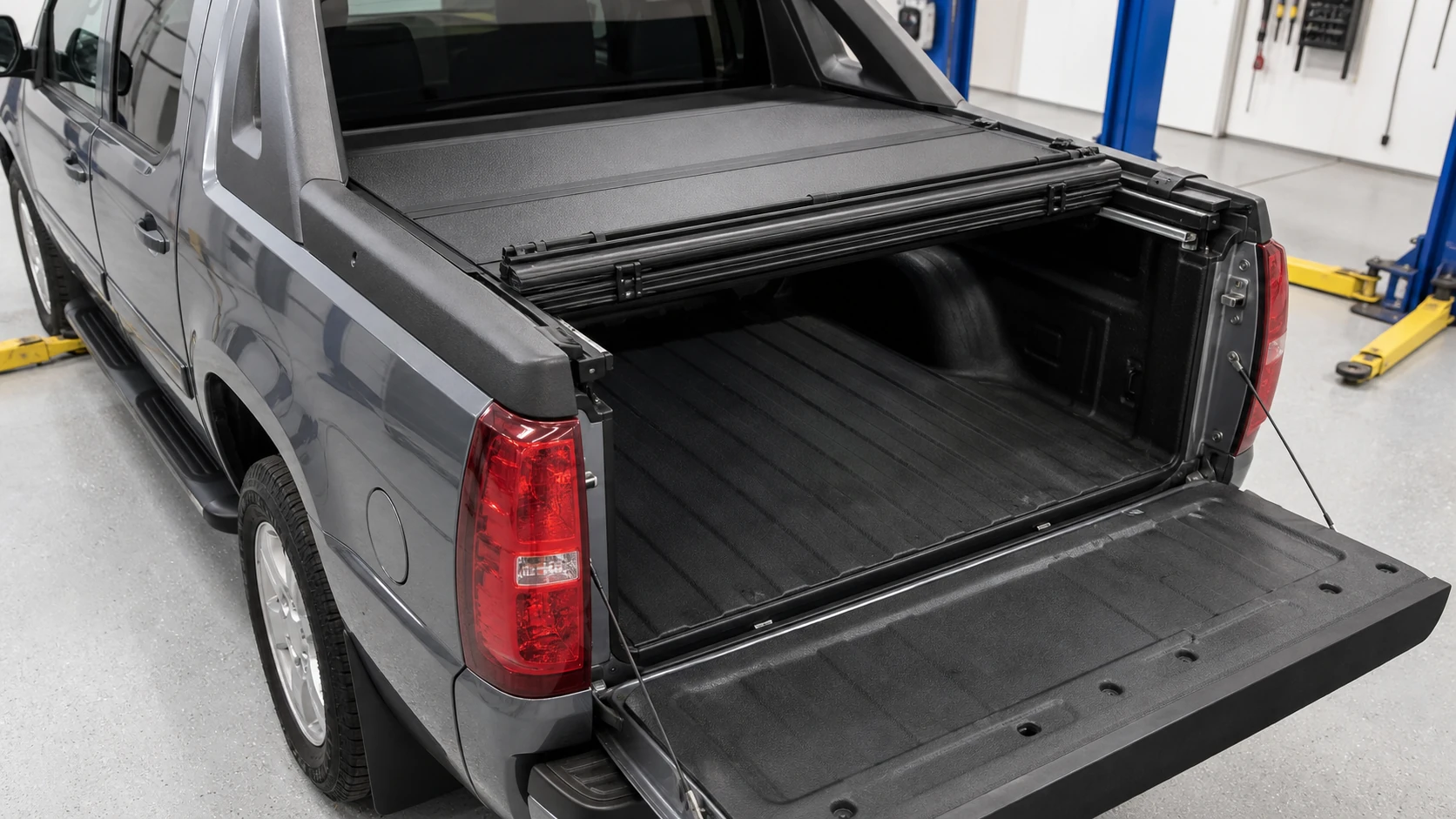
Both products are sold as no-drill installations for the correct application, but “no drill” does not mean “no adjustment.” Begin with a clean, dry mounting surface. Loosely position the rails, confirm equal height on both sides, then tighten the clamps in stages. Closing the cover before final tightening helps expose a rail that is too high, too low, or out of parallel.
- Inventory every rail, clamp, seal, tube, fastener, and instruction sheet before removing old hardware.
- Clean the rail surfaces and correct loose trim or damaged weatherstripping.
- Place the rails according to the Avalanche-specific instructions, not a generic pickup video.
- Measure the distance between rails at the front, middle, and tailgate before final torque.
- Cycle the cover several times and verify latch engagement on both sides.
- Test the tailgate with the cover open and closed. It should not require force.
- Route drain tubes downhill without kinks, then perform a controlled hose test.
- Recheck clamp torque and seal position after the first drive and again after several heat cycles.
Weather protection and realistic expectations
A well-installed tonneau cover significantly reduces rain, snow, dust, and UV exposure, but the Avalanche bed should not be treated like a sealed passenger compartment. Water can migrate around the tailgate, through aged body seals, or along a damaged rail. Store electronics and documents in weather-resistant containers even with a premium cover.
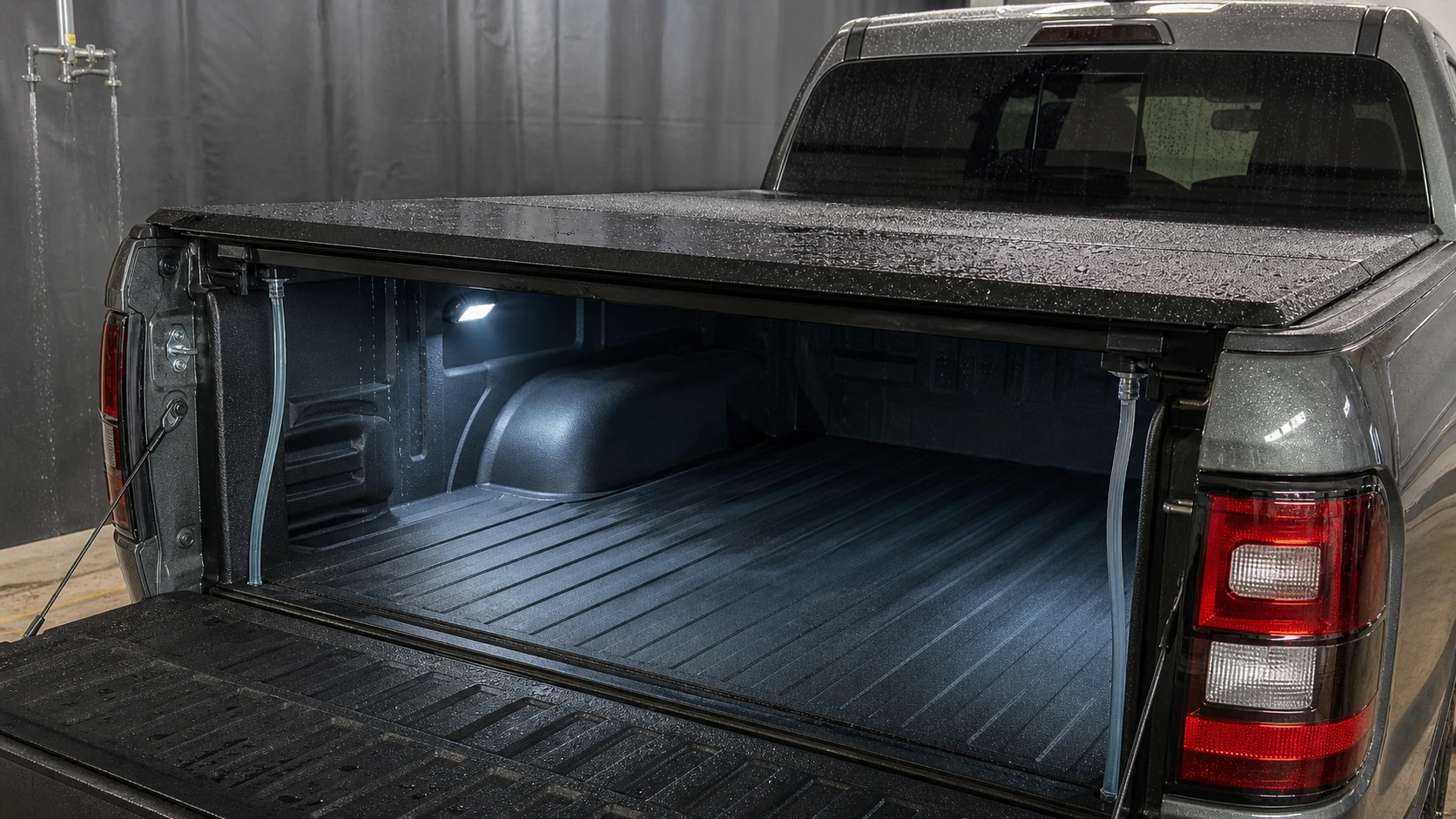
Hard covers need clean hinge and seal areas so grit does not abrade the panels. Soft covers need correct tension and should be cleared of heavy snow rather than used as a shelf. For either design, inspect the mounting hardware after rough roads, freezing weather, or any event that shifts a load against the rails.
Which cover should you choose?
Choose the BAKFlip F1 772108 if cargo security, rigid construction, and long-term outdoor use are the priorities. Its higher cost buys a stronger barrier and a more substantial panel system, but installation alignment and complete hardware matter.
Choose the TruXedo Lo Pro 561101 if you regularly need the entire bed opening, prefer a lighter system, and do not leave high-value cargo unattended. It is easier to roll out of the way and costs less, but it cannot provide the same cut resistance as a hard cover.
In either case, buy by exact part number, inspect the seller and warranty status, and verify the kit before installation. That is more reliable than choosing by an old star score or a generic claim that one cover is “best” for every Avalanche owner.