
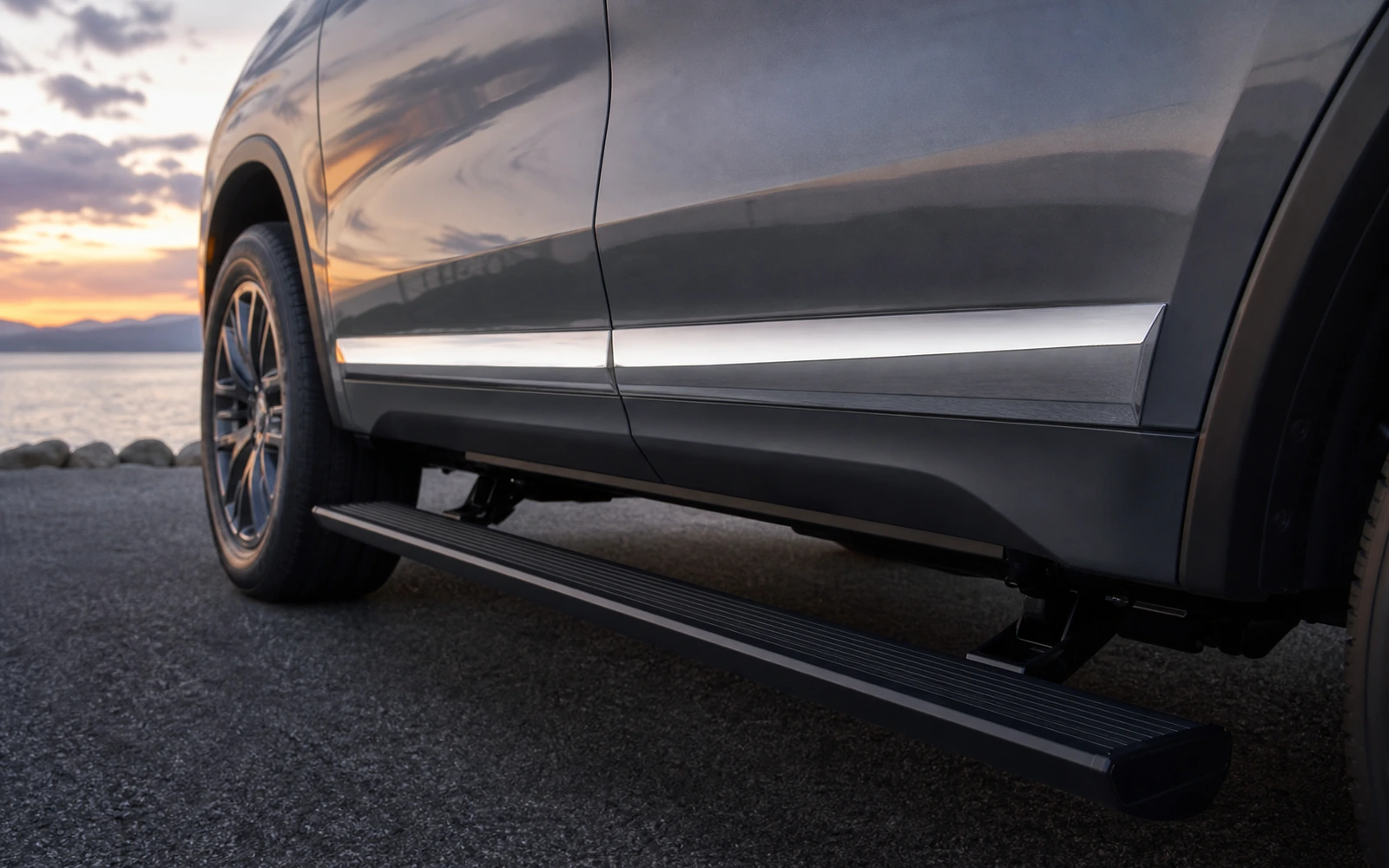
TH55656 is the narrower four-piece stainless accent intended for the 2015-2017 Navigator configuration with the retractable step bar. It should not be substituted for the wider TH55655 kit.
Fitment first
What to confirm before buying
Start with the running board, not merely the badge on the liftgate. TH55656 is tied to the retractable step-bar application and is excluded from the Navigator L according to the saved product text. Confirm a four-door, standard-length 2015-2017 vehicle, then cycle both power steps and compare the actual mounting faces with the four kit pieces. The 3.375-inch width, panel ends, door divisions, and clearance around moving joints all need to agree. A fixed running board, replacement power step, collision-repaired rocker, aftermarket step assembly, or altered trim can make the catalog description insufficient. Check that the step fully deploys and fully stows before adding anything to it; adhesive trim should not be used to disguise mechanical misalignment. TH55655's 5-inch panels belong to a different lower-body layout. Choosing between the two part numbers by width alone risks interference, poor adhesion, and uneven gaps.
Product at a glance
| Part | QAA TH55656 |
|---|---|
| Pieces | 4 |
| Width | 3.375 inches |
| Configuration | Retractable step-bar application |
How this accessory works in practice
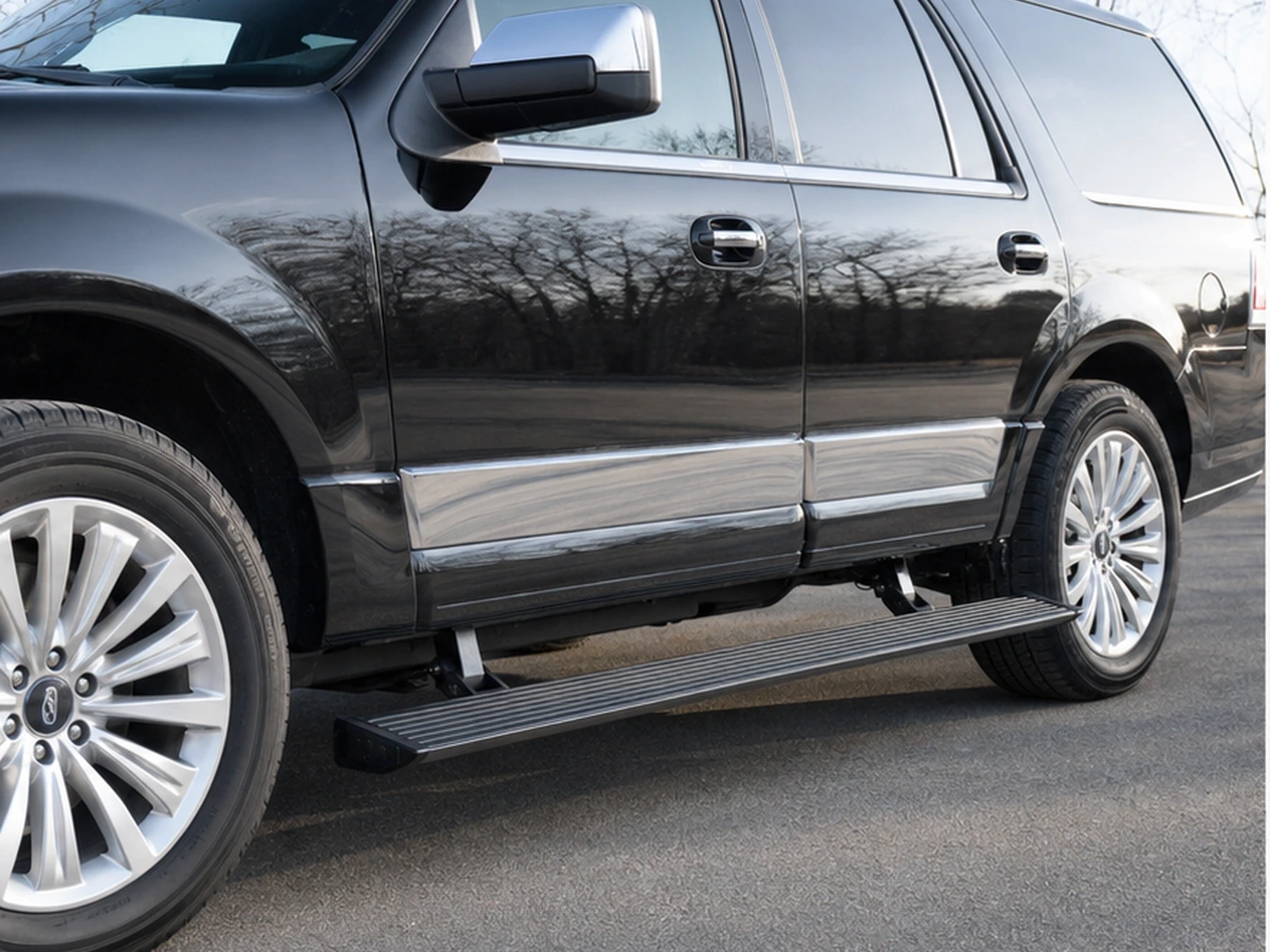
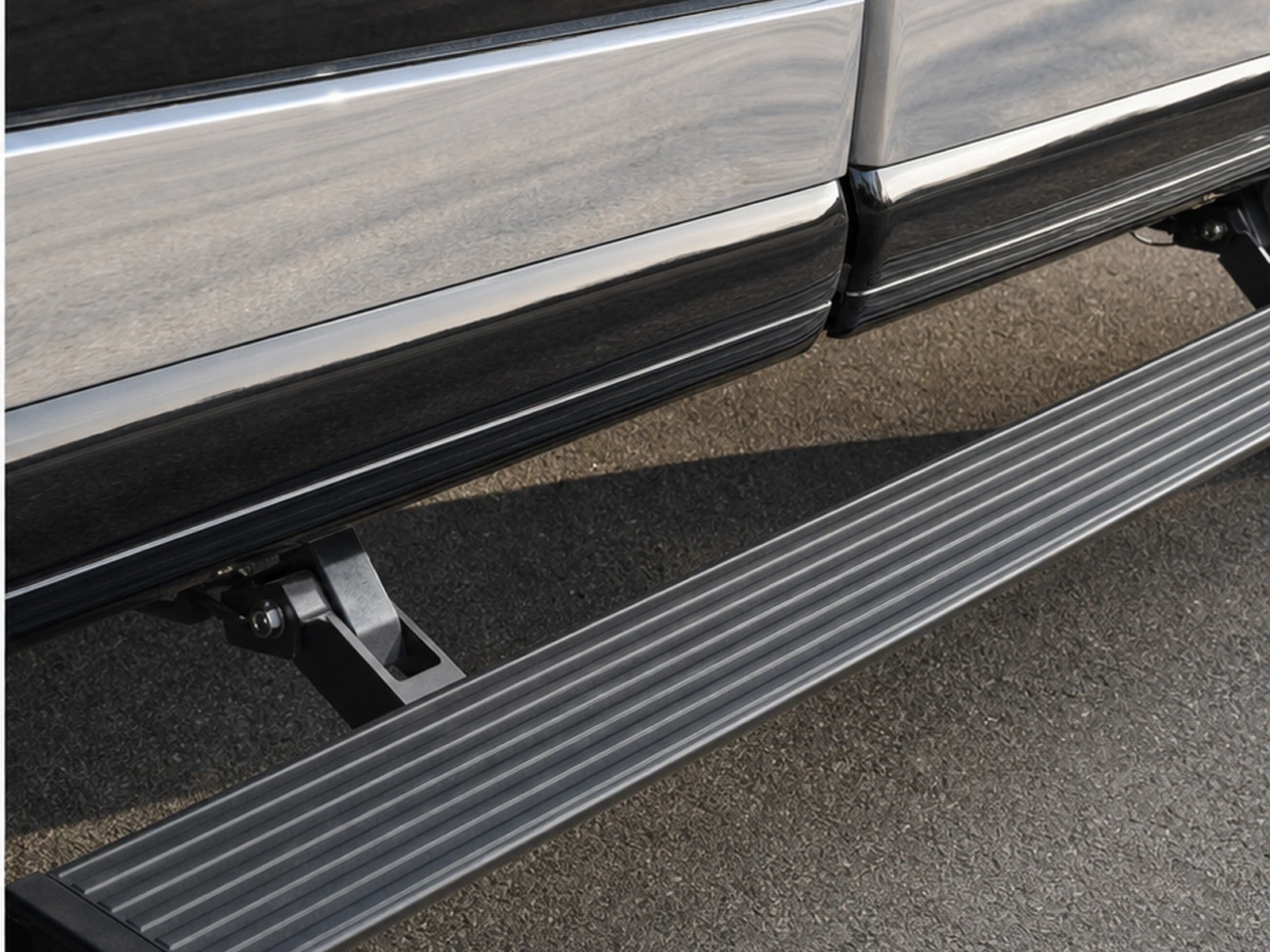
QAA TH55656 is the narrow rocker and step accent for a specific Lincoln Navigator configuration, not a smaller substitute for every vehicle that uses TH55655. The kit contains four polished stainless-steel pieces, each 3.375 inches wide, for listed 2015-2017 four-door Navigators equipped with the retractable step-bar arrangement. The saved description places the trim on the retractable step area and identifies 26-gauge stainless construction, a mirror-polished chrome look, pre-applied 3M adhesive, and protective film over the finished face. Its purpose is cosmetic. It follows the power-step layout to add a bright lower-body detail while leaving the original mechanism responsible for deployment and support. The trim does not strengthen a worn step, repair its motor, or correct a step that binds.
Daily use and ownership
The installed pieces move through the same deployment cycle as the retractable step area and sit where shoes, road spray, and cleaning residue are common. Their polished surface is primarily for appearance; it is not the load-bearing tread and should not be expected to improve traction. Step only on the surfaces intended by the factory running-board design. Watch the trim through several full cycles after installation and after any step service. There should be no contact with the rocker, brackets, hinges, wiring, or adjacent trim in either position. A new scrape, click, slower movement, or incomplete stow is a reason to stop cycling the mechanism and inspect clearance rather than forcing it.
Installation and setup
Verify that the power steps work correctly before surface preparation. With the vehicle secured and the mechanism controlled according to the service instructions, cycle the boards deployed and stowed while identifying every moving joint and pinch area. Never place hands near a powered hinge during a cycle. Wash the intended mounting faces, remove wax and silicone dressing, and use an automotive-safe residue-free cleaner. The surface must be dry, intact, and free from corrosion or loose coating. Dry-fit all four pieces with the adhesive liners in place. Mark each position and use masking tape to establish consistent end gaps and a straight visual line. Check the dry fit with the steps in both positions, paying particular attention to piece ends and any point that passes close to the body. Apply the trim only within QAA's specified temperature range. Once alignment is settled, follow the instructed liner-removal sequence and press uniformly across each piece without bending the thin stainless sheet. Leave the protective face film on during handling when permitted, then peel it away cleanly after bonding. Observe the adhesive cure instructions before cycling, stepping on, washing, or exposing the area to demanding conditions.
Care and maintenance
Keep grit from accumulating along the polished edges and around the power-step mechanism. Use mild wash products and soft materials, rinsing first so trapped sand does not scratch the mirror finish. Inspect the four pieces while the steps are deployed, then view them again when stowed. Look for lifted corners, shifted panels, rubbing marks, or debris near joints. Do not direct concentrated pressure-washer spray under adhesive edges. Step maintenance and lubrication should follow the vehicle or step manufacturer's procedure; avoid spreading lubricant onto the bonded surfaces. Correct mechanical play before it changes trim clearance.
Final checks before ordering
Cycle each power step several times while watching the full travel path, then measure the flat mounting faces only when the step is safely held in the position required by the instructions. Compare the 3.375-inch trim width with the usable face and verify clearance at hinges, end caps, lamps, sensors, and moving brackets. Record any difference between the left and right mechanism before assuming one side can guide the other. Order only after confirming that the step operates without sagging or hesitation, because trim cannot correct a worn mechanism. Plan the installation so both alignment and adhesive curing can be completed without repeatedly cycling the boards.
Buy it when
- Buy TH55656 when a standard-length, four-door 2015-2017 Navigator has the documented retractable step-bar layout, the mechanism operates properly, and the measured 3.375-inch pieces match the available faces. It fits a cosmetic build that favors a polished stainless accent and accepts careful adhesive preparation.
Skip it when
- Skip it on a Navigator L, a fixed-board vehicle, an aftermarket step with different geometry, or a power step that hesitates, sags, rubs, or fails to stow. It is also a poor choice for damaged coating, active corrosion, or anyone expecting the trim to serve as a tread plate, structural reinforcement, or mechanical repair.
Frequently asked questions
Does TH55656 attach to the retractable step area?
Yes. The saved application description associates the narrow 3.375-inch pieces with the retractable step-bar layout. That makes a full deployed-and-stowed clearance check essential before any adhesive liner is removed.
Can TH55656 be used instead of the wider TH55655?
Not simply as a styling choice. The kits correspond to different mounting layouts: TH55656 is the narrow retractable-step application, while TH55655 is the wider upper rocker treatment. The correct vehicle configuration determines the part number.
Will the trim repair a loose or noisy power step?
No. It is a cosmetic stainless accent and has no stated repair function. Diagnose the motor, brackets, hinges, wiring, alignment, or control system first. Adding trim to a malfunctioning step can introduce another interference point.
Why should the steps be cycled during dry fitting?
A piece that appears clear when deployed may approach the body or a joint when stowed. Checking both end positions exposes interference, crooked placement, and inadequate end gaps while the adhesive can still remain untouched.
Related fitment guides
- QAA TH55655 Rocker Panel Trim for 2015-2017 Lincoln Navigator
- Replacement Exterior Door Handle for 2003-2017 Expedition and Navigator
- WHEEL WELL COVERS BUYING GUIDE | REVIEW & MAINTENANCE
Technical reference
Application and technical details were checked against Official QAA Navigator catalog. Use the manufacturer application data and the vehicle’s own measurements as the final fitment check.