
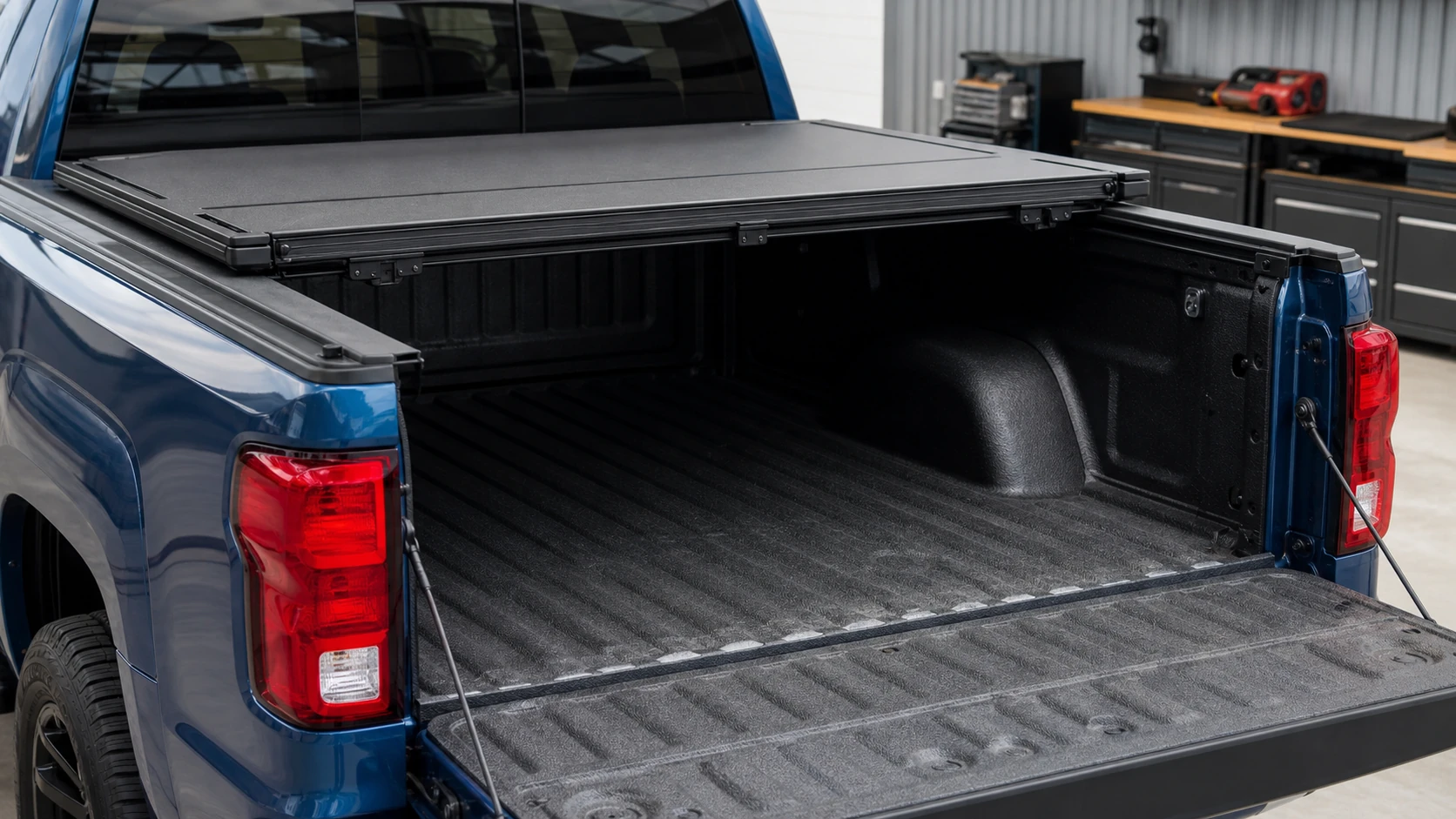
A hard-folding cover is built from multiple rigid panels connected by hinges. The assembly rests on truck-specific side rails and folds toward the cab in sections. Most drivers can open the rear portion quickly for groceries or tools, then fold additional panels when the bed needs to carry taller cargo. That flexibility explains the format’s popularity, but it also creates fitment and maintenance details that should be understood before ordering.
Why truck owners consider a hard-folding cover
The practical benefits are cargo privacy, weather resistance, and adjustable bed access. With the panels closed and the tailgate locked, cargo is not visible and the normal release points are harder to reach. With one or more panels folded, the owner can reach the bed without removing the complete cover. When the system is fully opened according to its instructions, most of the bed can be used for tall items.
A tonneau cover does not guarantee fuel-economy improvement, stop a determined theft, or create a waterproof trunk. Airflow and fuel use depend on the truck and driving conditions. Water can enter through bed seams and tailgate gaps. Security is limited by the tailgate, rails, panels, and installation. A good cover should therefore be selected for useful access and cargo protection rather than an exaggerated promise.
Understand the main hard-folding layout
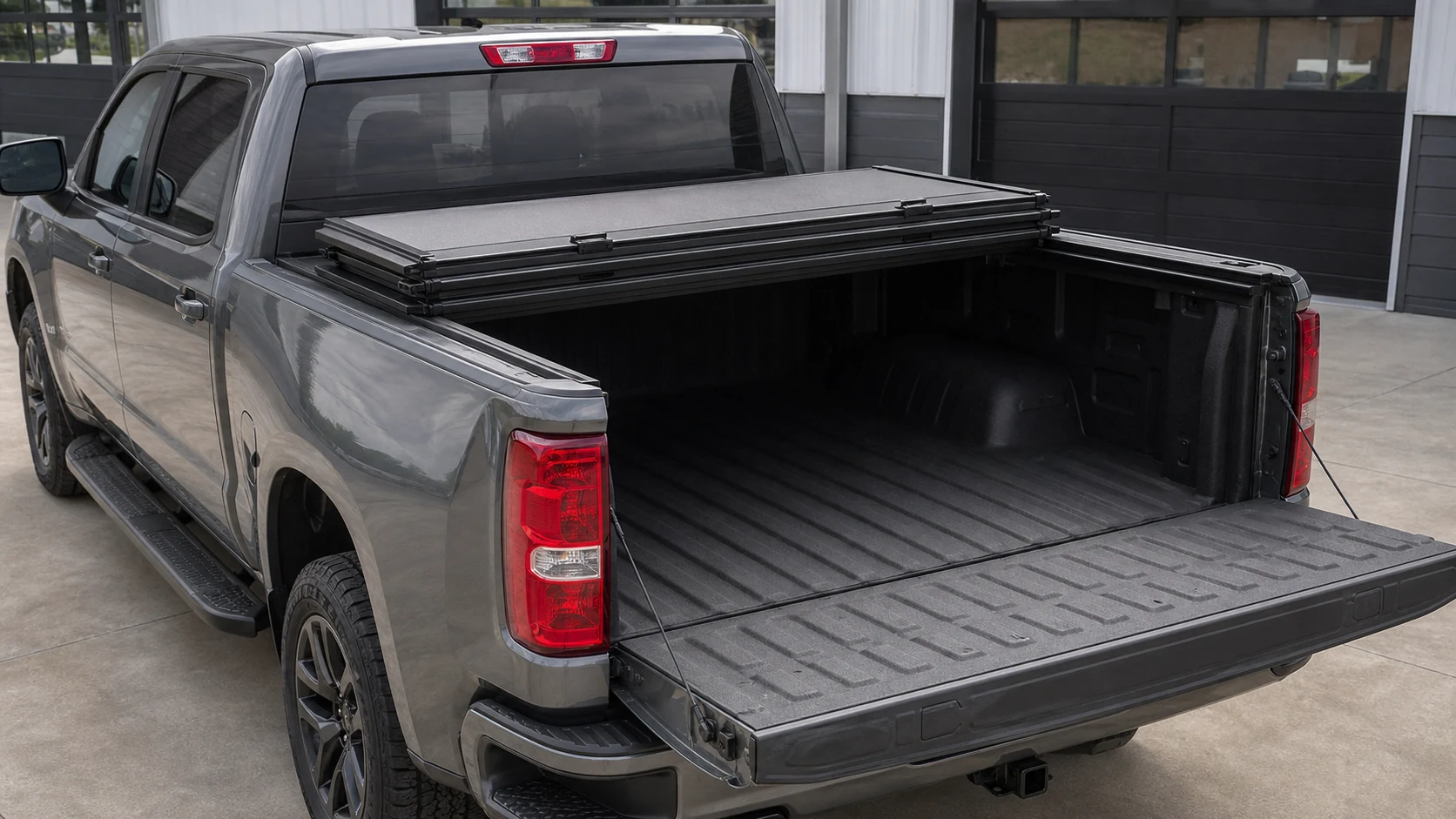
The side rails provide a level surface and contain latch points or channels. Panels fold along transverse hinges, usually beginning at the tailgate. Some systems allow the stack to rest flat near the front of the bed; others can be secured in an upright position for broader access. The exact operating method matters because an upright panel may reduce rearward visibility and must be held by the specified support hardware.
Drain channels near the front rails may route water through tubes. Perimeter seals bridge small gaps at the bulkhead and bed caps. Latches keep the panels seated. None of these parts can compensate for rails that are out of parallel, clamps installed on unsuitable surfaces, or a cover ordered for the wrong bed.
Fitment checklist before ordering
- Confirm the model year and body generation. A mid-cycle bed or tailgate change can alter fitment even when the model name is unchanged.
- Measure the usable bed length. Measure inside the bed from the bulkhead to the inside of the closed tailgate and compare with the manufacturer’s method.
- Identify the factory rail system. Cargo-management tracks, movable tie-downs, deck rails, and utility beds may require dedicated hardware.
- Inspect the bedliner. A drop-in liner can cover clamp locations or raise the bulkhead surface; a spray-in liner changes surface preparation.
- List other accessories. Racks, sport bars, toolboxes, bed caps, stake-pocket mounts, and powered tailgate equipment may compete for the same space.
Do not select a cover from a generic image. The same photograph may be used across several applications, while the rails and panel dimensions in the box are truck-specific. Save the confirmed part number and compare it on the manufacturer listing, retailer page, and shipping label before installation.
Choosing among BAKFlip-style models
Rather than focusing on a single model name, compare attributes that affect ownership:
- Panel surface and core. Different materials change appearance, weight, heat behavior, and resistance to dents.
- Finish. A matte or textured finish may match bed caps differently and can require specific cleaners.
- Opening method. Check whether the cover can be closed with the tailgate already shut and how the final stack is secured.
- Rail intrusion. Inboard rails reduce a small amount of bed opening and may interfere with wide cargo.
- Service parts. Verify availability of seals, clamps, latch components, drain tubes, and prop hardware.
- Published load and operating limits. Use only the limits for the exact product; never stand or sit on a cover unless its documentation explicitly permits the load and conditions.
Installation: alignment is the real job
Many hard-folding covers install without drilling on a conventional pickup bed, but “no drill” does not mean “no precision.” Clean the bulkhead and rail contact areas. Position any supplied bulkhead seal according to the bed-cap configuration. Set both rails at the specified height and distance from the bed edges, then place clamps where the instructions show structural support.
Tighten clamps gradually while checking that the rails remain parallel. Set the folded cover at the front, attach its mounting hardware, and unfold it toward the tailgate. The last panel should meet the tailgate evenly, and both latches should engage without forcing the cover sideways. If one side is tight and the other loose, correct rail position instead of modifying a latch.
Route drain tubes with a continuous downward path and protect them from cargo. Some beds provide factory openings; others may require a permitted grommet or routing point. Do not drill through wiring, fuel components, or structural areas. If the instructions are unclear, use a qualified accessory installer.
First-week checks
Open and close every panel several times before the first highway drive. Verify all bumpers contact where intended, prop rods lock into their retainers, and nothing can swing into the rear window. After a few heat cycles and drives, recheck the clamps and panel alignment. New seals may compress enough to change tailgate contact.
Listen for flutter, tapping, or a new rattle. A loose clamp or unsecured prop can damage the rail. Stop and inspect if the cover lifts at a corner, a latch does not seat, or the stack shifts while secured.
Weather resistance without unrealistic expectations
Water management starts with the truck bed itself. Stake-pocket openings, tailgate seams, bedliner gaps, and factory body joints can admit water even when the panel seals are working. Test with a low-pressure hose, beginning at the bulkhead. Observe the first point of entry rather than soaking the entire bed at once.
A leak across the front edge may indicate an unsuitable bulkhead seal or dirty surface. Water near one rail can come from misalignment, a twisted seal, or a blocked drain. Entry around the tailgate may require truck-specific weather stripping, but extra material must not prevent the tailgate or cover from latching correctly.
Remove snow before folding the panels. Ice in a hinge or seal can damage the surface when forced. In hot climates, follow the care guide for the finish; household solvents and aggressive dressings can discolor panels or weaken seals.
Security and responsible cargo storage
Closed rigid panels and a locked tailgate deter casual access and conceal cargo. They are not a safe. Tools can damage panels, and a compromised tailgate can expose latch cables. Expensive equipment should be removed overnight or placed in a separate secured box where appropriate.
Keep cargo below the panel line and secure it to the truck’s tie-downs, not the cover rails. A shifting object can strike a panel from below. Chemicals, fuel containers, batteries, and compressed-gas cylinders require their own safe transport methods and ventilation; a covered bed does not make unsafe cargo safe.
Using the bed with the cover folded
For a small load, fold only the necessary panels and use the designated buckles or straps. For a tall load, follow the instructions for the fully open position. If panels stand upright, expect some reduction in rearward visibility and rely on safe mirror and camera practices. Never drive with panels unsupported or with improvised cords replacing the supplied hardware.
Check clearance before loading a motorcycle, appliance, or construction material. The folded stack, rails, latches, and rear window all need space. A full-width toolbox or certain ladder racks may require a purpose-built compatible cover instead of adapting the standard one.
Maintenance schedule
- Wash panel surfaces and seals with mild automotive soap.
- Remove sand from hinges and rail channels before folding.
- Inspect clamp tightness, latch cables, end caps, bumpers, and prop hardware.
- Clear drain channels and confirm tubes have not been crushed by cargo.
- Replace torn seals with the correct profile rather than stacking random foam tape.
- Check operation after collision repair, bed removal, or installation of another accessory.
Troubleshooting common complaints
The rear panel will not latch: verify rail spacing, tailgate seal position, and whether cargo is pushing upward. One corner sits high: inspect for a twisted rail or debris beneath a seal. The panels are difficult to fold: clean hinge areas and confirm the rails are not squeezing the cover. Water pools in the bed: inspect drain routing and the truck’s own bed drains before adding more sealant.
Bottom line
A BAKFlip hard-folding cover can be an effective everyday solution when it matches the truck and the owner’s cargo routine. Buy by verified part number, not by a family name or generic photograph. Install the rails precisely, secure the cover in every open position, maintain the drains and seals, and treat weather resistance and security realistically. Those steps matter more than any single feature label.