
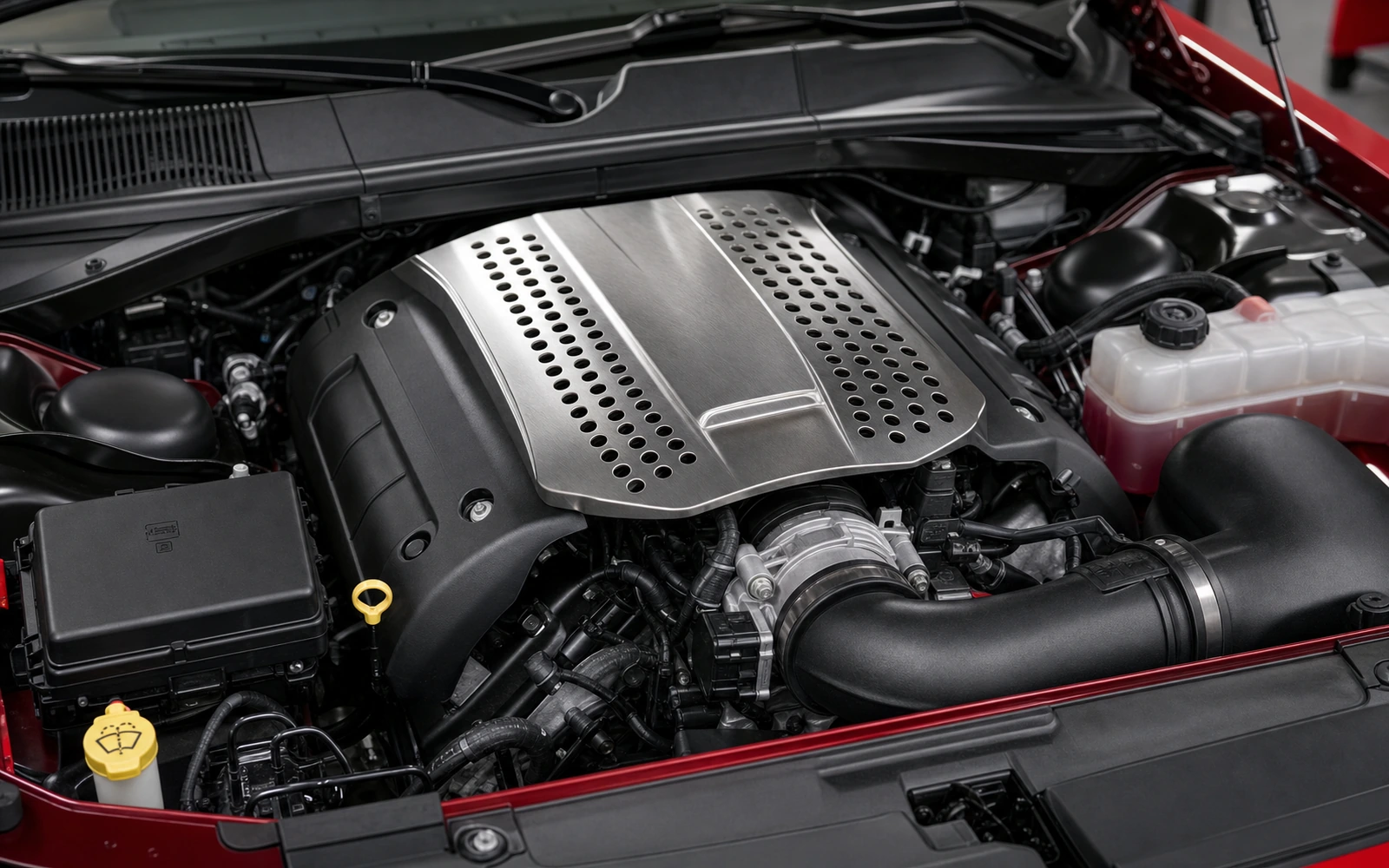
This stainless perforated cover is a cosmetic engine-bay panel for the 6.4L Challenger intake. It does not add horsepower; its value is a cleaner show-car presentation and a reversible installation.
Fitment first
What to confirm before buying
Confirm the engine and the physical plenum shape, not only an SRT badge or a Challenger model name. The saved listing states a 2015 Dodge Challenger with the 6.4-liter engine, while the rebuilt catalog advises checking the 6.4-liter SRT 392 intake-cover form and any changes on other model years. Do not extend that application to a 5.7-liter, 3.6-liter, different intake assembly, or later vehicle simply because the engine bay looks related in a small image. Compare perimeter shape, raised details, hose and wiring routes, factory labels, oil-service access, and every retention point shown in the product instructions. Previous intake modifications, dress-up parts, strut braces, catch-can plumbing, or rerouted wiring may occupy the same space. A drop-on panel still needs stable support and complete clearance. If the vehicle or plenum is not the documented configuration, obtain explicit part-number fitment rather than bending or trimming stainless steel to approximate it.
Product at a glance
| Application | Challenger SRT 392 6.4L |
|---|---|
| Material | Perforated stainless steel |
| Purpose | Engine-bay appearance |
| Installation | Drop-on / retained decorative panel |
How this accessory works in practice
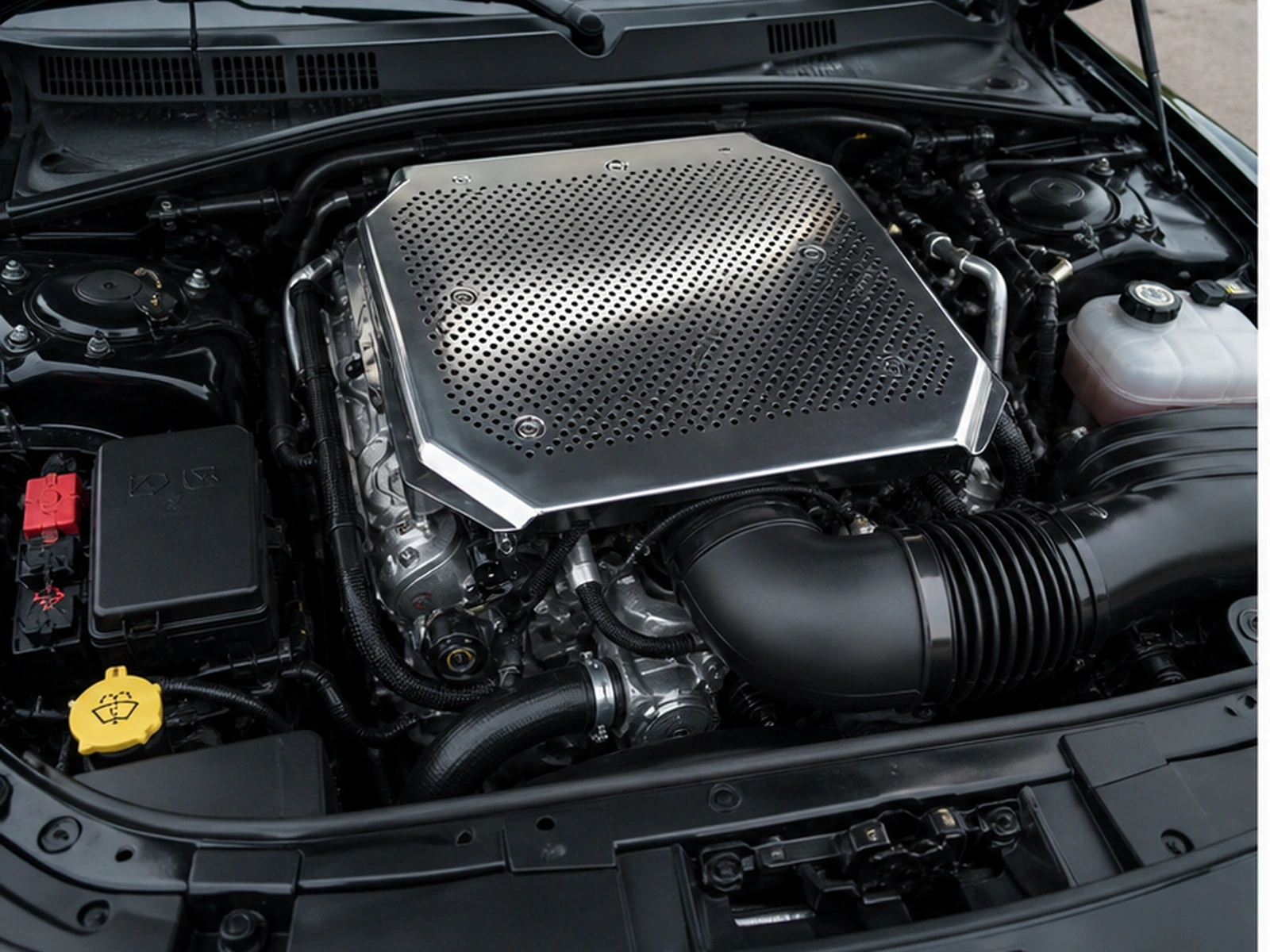
This perforated plenum cover is a decorative underhood panel for the 6.4-liter Dodge Challenger SRT 392 application identified in the saved product material. The specialist record associates it with the 2015 Challenger and describes American Car Craft polished 304 stainless-steel construction with a perforated pattern. It drops over the intake plenum to change the engine bay's presentation and can be removed for service. Its purpose should remain clear: it is a show-oriented appearance part. There is no documented horsepower gain, tuning change, cooling improvement, sound change, or mechanical protection in the supplied sources. The value lies in the stainless finish, patterned surface, and reversible character for an owner whose exact intake-cover shape matches the part.
Daily use and ownership
The cover changes what is visible when the hood is open; it does not change how the car should be driven or serviced. Stainless steel in an engine bay follows underhood temperature, so the panel can become hot after operation. Let the engine cool before touching or removing it. The perforations expose portions of the surface beneath and can collect dust around their edges, which is mainly a detailing consideration. Check that the panel remains seated and quiet after normal driving. Any new rattle, polished contact mark, pinched hose, disturbed connector, or shifted cover calls for removal and inspection. Do not place tools on the panel, lean body weight against it, or judge safe handling temperature by appearance.
Installation and setup
Work only with the ignition off and the engine fully cool. Clean loose dust from the factory plenum so grit is not trapped between the two surfaces. Before installing, inspect the stainless piece for shipping distortion and compare its outline with the intake cover. Identify how the supplied instructions retain or locate it; the saved description calls it a drop-on accessory, but the exact retention method should come from the part package. Lower the panel into place without forcing it past hoses, harnesses, clips, caps, or raised factory features. Check all edges with a light and confirm that no sharp stainless edge bears against wiring or a flexible line. Make sure factory warning labels and fasteners needed for routine service remain accessible, or plan to remove the decorative cover whenever access is required. Before closing the hood, verify upper clearance using the manufacturer's procedure rather than slamming the hood on an uncertain fit. Start the engine only after tools and packaging are removed, then listen for contact without reaching into a running engine bay. After a short drive and complete cool-down, inspect the seating again. Remove the cover before any service operation when it obscures a fastener, label, inspection point, or component.
Care and maintenance
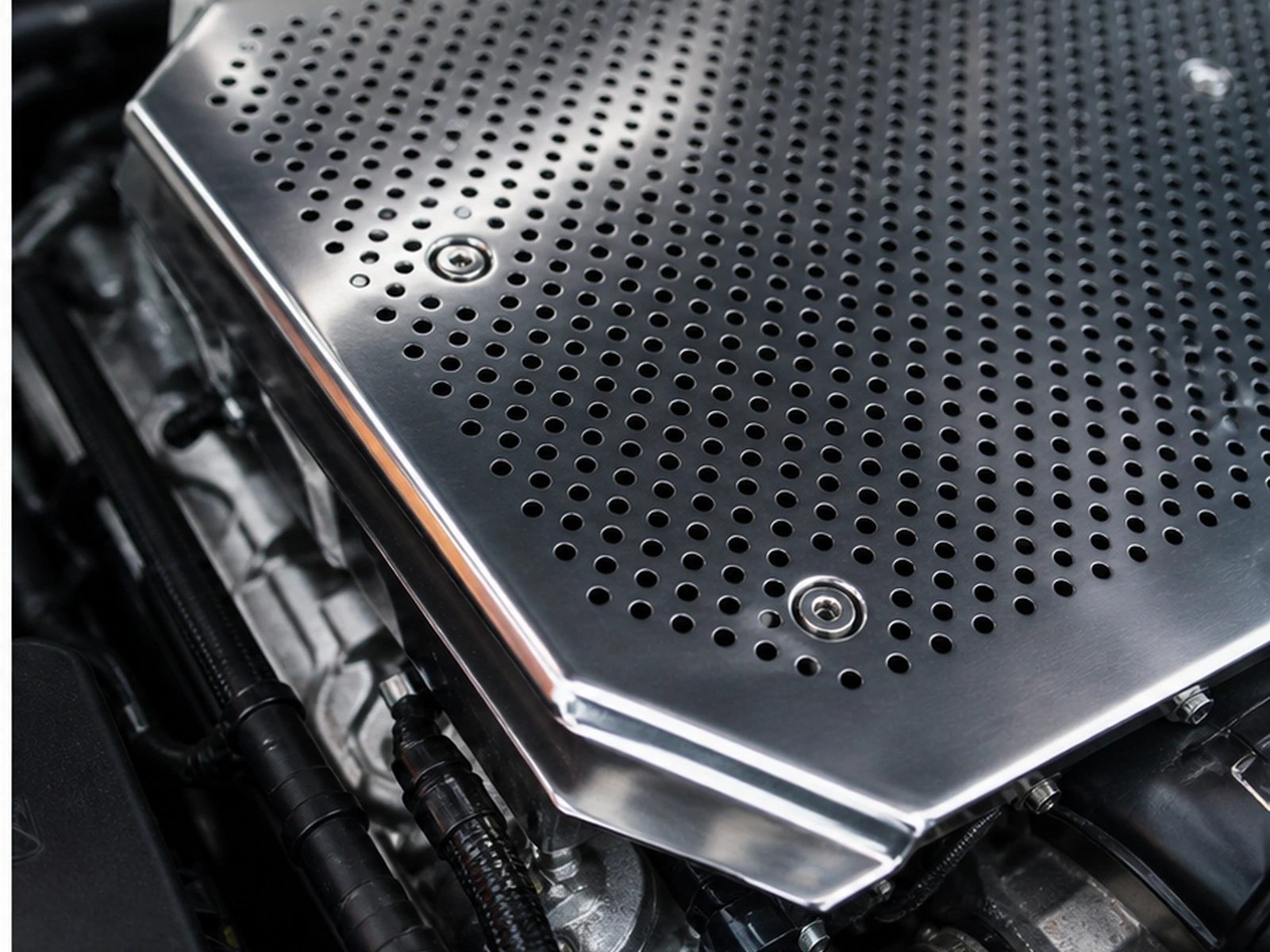
Clean the panel only when cool. Lift it according to the instructions, remove dust from both sides, and use a soft cloth with a product suitable for polished stainless steel. Rinse or wipe away grit before polishing so the finish is not covered in fine scratches. Keep cleaner away from belts, electrical connectors, and intake openings. The perforated edges deserve gentle attention rather than aggressive tools. After underhood work, confirm that technicians have returned the cover to its proper position and that no wiring or hose has been routed beneath an edge. Remove it promptly if it warps, rattles, or no longer sits flat.
Final checks before ordering
With the engine cold, photograph the complete factory plenum and record the vehicle year, engine code, and any aftermarket intake or dress-up parts already present. Compare the cover perimeter, raised sections, oil-fill access, hose routes, and retention points with the actual engine rather than a cropped product image. Check that the panel can be removed without disturbing wiring and that its edges will not contact a moving component or a heat-sensitive hose. Because this is an appearance accessory, inspect the polished face for scratches and the perforated edges for distortion before installation, while replacement or return remains straightforward.
Buy it when
- Buy this cover when the car has the explicitly documented 6.4-liter Challenger plenum shape, the goal is a polished perforated show-car detail, and the owner accepts cool-engine handling and occasional removal for service. It works best in an engine bay that remains otherwise clear around the intake cover.
Skip it when
- Skip it when the goal is more power, lower intake temperature, extra protection, or a mechanical repair. It is also unsuitable for another engine, an unverified model year, a modified intake area with uncertain clearance, or an owner who does not want an additional hot metal panel to remove during maintenance.
Frequently asked questions
Does the perforated plenum cover add horsepower?
No performance gain is documented in the supplied product information. The rebuilt page classifies it as a cosmetic engine-bay panel. Treat the stainless cover as appearance equipment, not as tuning, airflow, or thermal-management hardware.
Can it be assumed to fit every 6.4-liter Challenger?
No. The saved listing identifies the 2015 application, and the rebuilt catalog says to confirm intake-cover shape and model-year changes. Engine displacement is necessary context, but the exact plenum geometry and surrounding equipment still decide fit.
Will the stainless cover get hot?
Yes, it can become hot in the engine compartment after operation. Shut the vehicle off and allow a full cool-down before touching, cleaning, or removing the panel. Do not use a bare-hand check to estimate underhood temperature.
Should the cover stay installed during service?
Only when it leaves every required label, fastener, and component accessible and the service procedure permits it. Because the panel is removable, take it off whenever it obstructs work or could be scratched, bent, or incorrectly trapped during reassembly.
Related fitment guides
- Hard-Folding Tonneau Cover for 2005-2015 Toyota Tacoma 6 ft Bed
- QAA TH55655 Rocker Panel Trim for 2015-2017 Lincoln Navigator
- MagnaFlow 19506 Cat-Back Exhaust for 2015-2020 F-150 5.0L
Technical reference
Application and technical details were checked against Specialist product and application record. Use the manufacturer application data and the vehicle’s own measurements as the final fitment check.