
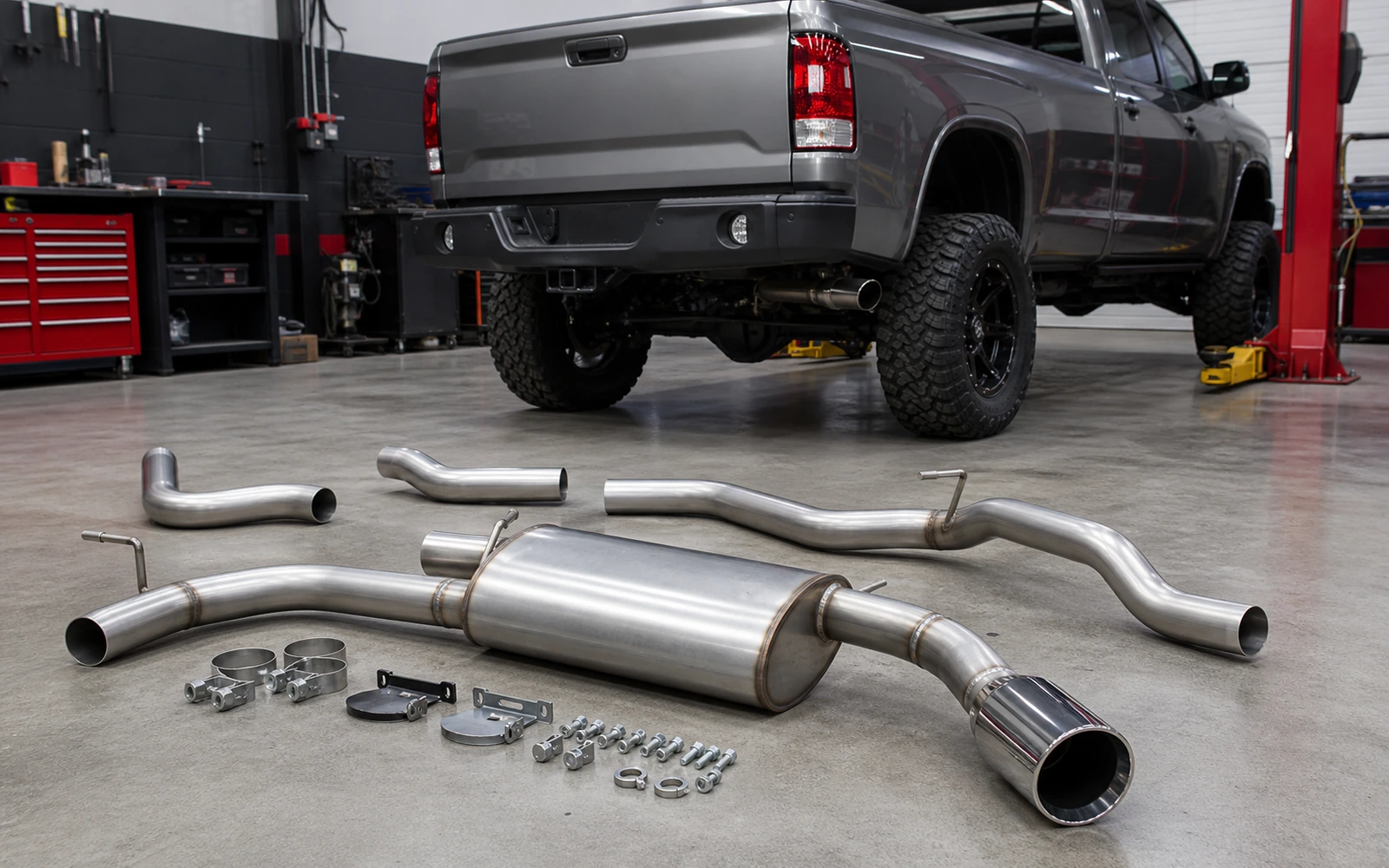
MagnaFlow 19506 is the current Street Series reference for the 5.0L F-150 and extends the old 2015-2016 page through the 2020 model year. It changes sound and exhaust routing; power gains should not be promised without instrumented testing.
Fitment first
What to confirm before buying
Verify four fitment layers before ordering: engine, cab, bed, and wheelbase. The engine must be the 5.0L V8 application specified for 19506; an F-150 with a 3.5L engine is not confirmed by the model name alone. Next identify Regular Cab, SuperCab, or SuperCrew rather than relying on a broad full-size-truck filter. Then measure or decode the bed as 5.5, 6.5, or 8 feet as applicable. Cab and bed combine to establish the wheelbase, which determines intermediate-pipe length, hanger position, and outlet location. Two trucks with the same engine and model year can therefore need different routing. Use the manufacturer's selector to confirm the exact cab-bed-wheelbase combination and intended exit before purchase. Also check for an aftermarket hitch, spare-tire changes, suspension modifications, auxiliary fuel equipment, or body accessories near the outlet. A legacy chart that groups multiple engines or body styles is not sufficient confirmation.
Product at a glance
| Current SKU | MagnaFlow 19506 |
|---|---|
| Vehicle | 2015-2020 Ford F-150 |
| Engine | 5.0L V8 |
| System | Street Series cat-back exhaust |
How this accessory works in practice
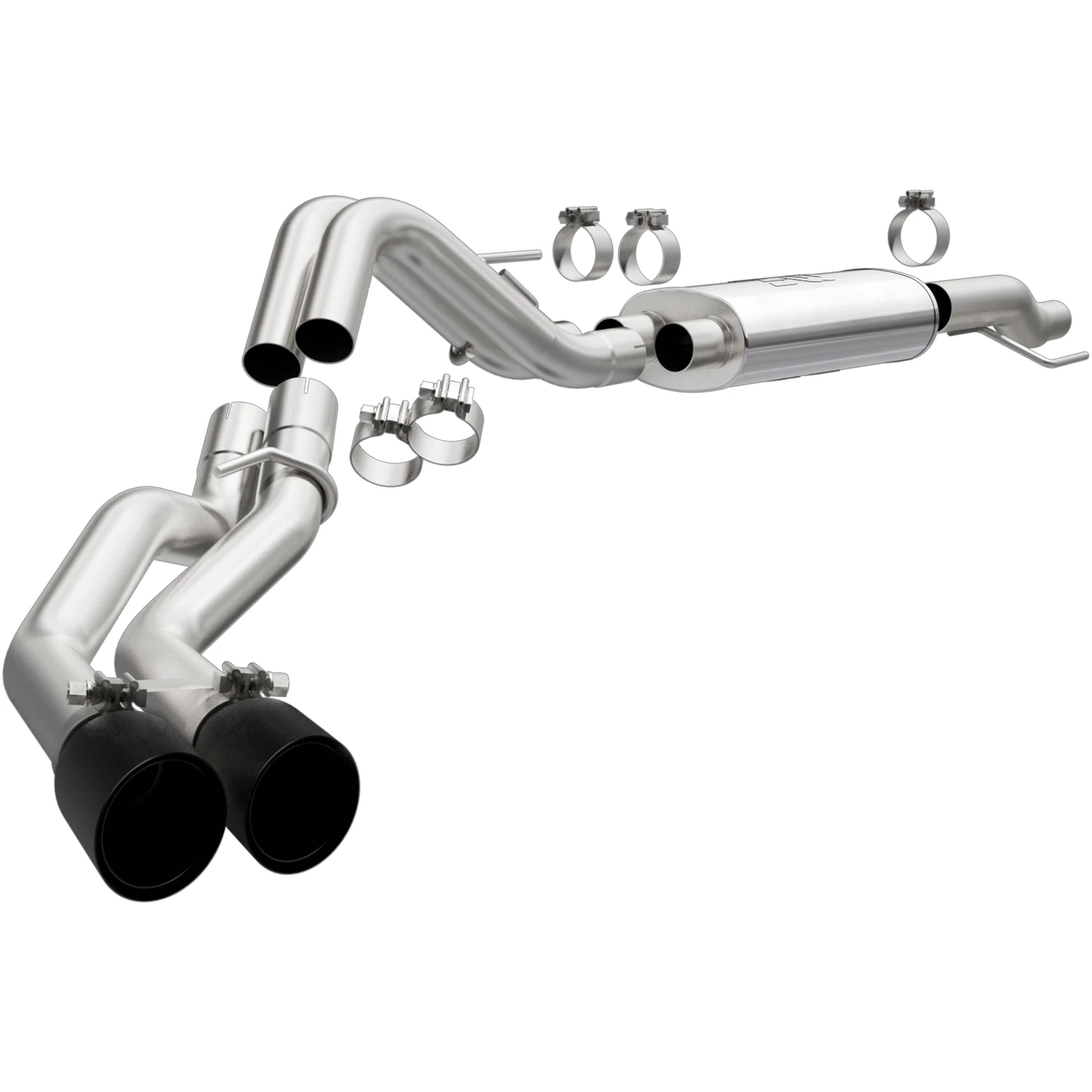
MagnaFlow 19506 is a Street Series cat-back exhaust reference for Ford F-150 trucks equipped with the 5.0L V8. The documented application spans the 2015-2020 model years, but the year and engine range alone do not prove that the system fits a particular truck. A cat-back replaces exhaust components behind the factory catalytic-converter section and changes the muffler, pipe routing, outlet, and sound without serving as an engine tune. The listed system uses stainless construction and a bolt-on format. Its strongest defensible benefit is a purpose-built replacement path with a different exhaust character. Horsepower, torque, fuel economy, reduced temperature, or scavenging gains should not be promised without controlled testing on the exact vehicle. Sound is also subjective: a tone that seems restrained during an unloaded drive may be more noticeable at cold start, during towing, or at a steady highway load.
Daily use and ownership
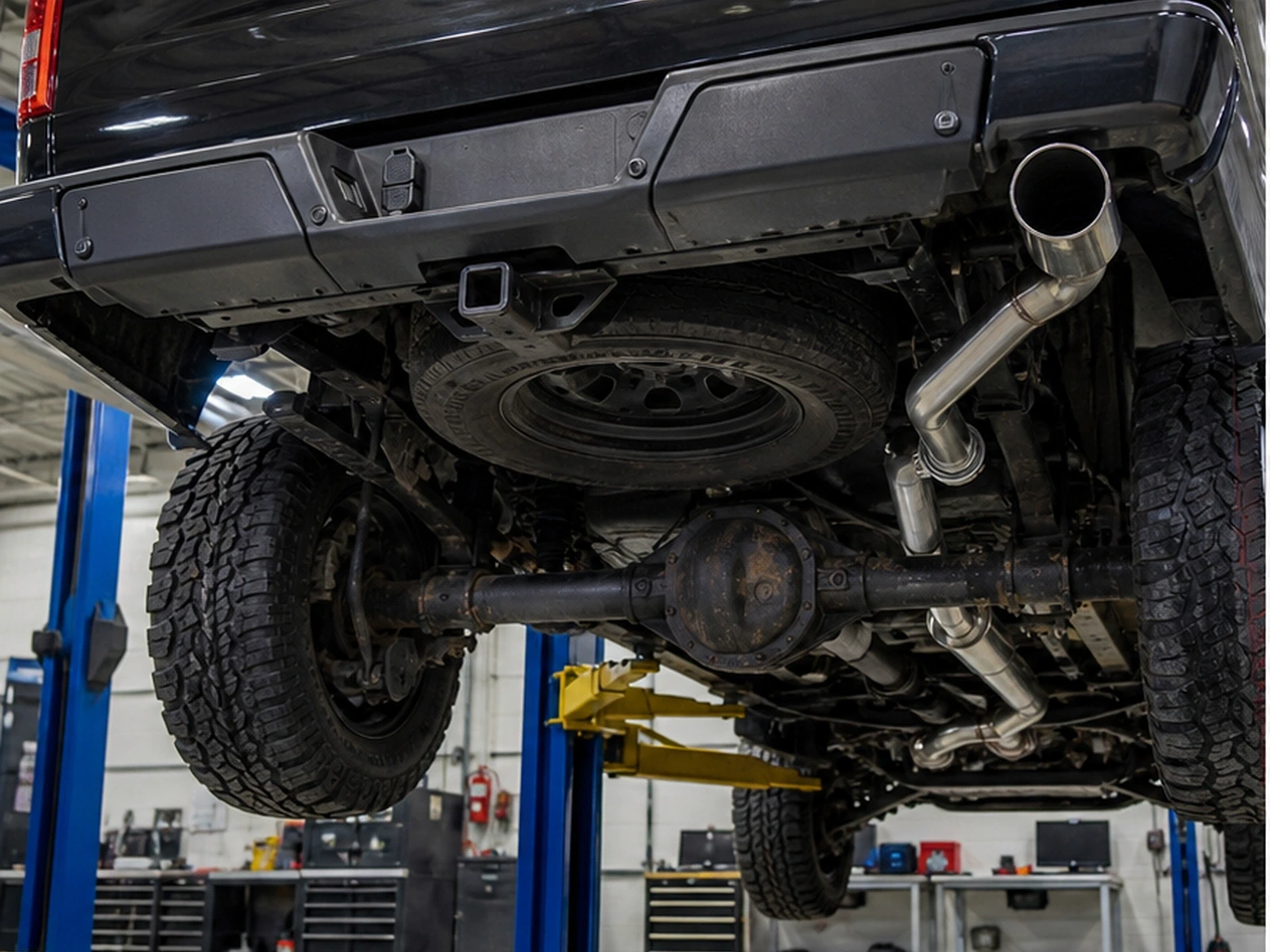
Expect the most obvious change to be sound and outlet routing. Listen for resonance at the engine speeds used during commuting, towing, and long grades, not only during a stationary rev. A cat-back should remain supported by the intended hangers and should not strike the axle, spare tire, frame, body, brake lines, or hitch as the powertrain and suspension move. After the first drives, inspect for a shifted tip, soot at a joint, a metallic rattle, or a rubber hanger pulled sideways. A new system can change how much exhaust noise reaches passengers, but it should not create exhaust odor in the cab. Stop and inspect if odor appears, especially at idle or with windows open. Do not idle in enclosed spaces. Any claim that the system automatically increases power or efficiency should be treated as unverified unless the exact truck has repeatable before-and-after measurements under the same conditions.
Installation and setup
Work only on a fully cooled exhaust and support the vehicle with equipment rated for its weight on a stable surface. Support the factory exhaust before separating joints. Penetrating lubricant can help with corroded clamps and fasteners, but rusted studs, distorted flanges, or seized pipes may require professional removal. Compare every new section, hanger, bend, and outlet with the confirmed instructions before removing the original system. Assemble the cat-back loosely so each joint can rotate. Set clearance around the spare tire, rear axle through its expected travel, body, wiring, brake hoses, hitch, and heat-sensitive trim. Align the outlet, seat the hangers naturally, then tighten clamps in the specified sequence and torque. Do not force a mismatched pipe into place or use a hanger to pull the system sideways. Start the engine outdoors, check every joint for leakage, and listen for contact. Recheck alignment and clamp torque after heat cycles.
Care and maintenance
Inspect the system at routine service intervals and after off-road contact, towing over rough roads, or rear suspension work. Look for loose clamps, cracked or stretched hangers, fresh soot around joints, impact dents, corrosion, and reduced clearance. Clean the visible outlet with a product compatible with its finish, but do not use appearance as the only leak check. A rattle that changes with engine load can come from a heat shield, hanger, or pipe touching the chassis. Exhaust odor, a suddenly louder note, or soot near a connection calls for prompt inspection. Replacement clamps and hangers should match the system rather than being improvised from hardware that changes pipe alignment.
Buy it when
- Buy 19506 if the manufacturer's application data confirms the truck's 2015-2020 model year, 5.0L V8, exact cab, bed length, wheelbase, and exit arrangement, and if a Street Series sound fits the way the truck is used. It is a reasonable choice when stainless construction, a bolt-on cat-back layout, and a complete matched routing are more important than making unsupported performance claims.
Skip it when
- Skip it if any one of the engine, cab, bed, wheelbase, or outlet checks is unresolved. Choose another system if you need the quietest factory-like cabin, if local noise rules make the intended sound unsuitable, or if accessories occupy the exhaust path. It is also the wrong purchase when the goal is guaranteed horsepower or fuel savings without instrumented evidence, or when severe corrosion makes a bolt-on home installation unrealistic.
Frequently asked questions
Will MagnaFlow 19506 fit an F-150 with a 3.5L engine?
The documented 19506 application is the 5.0L V8. Do not infer fitment from the F-150 name or from a legacy table that includes other engines. Select a system explicitly confirmed for the exact engine and truck configuration.
Why do cab, bed length, and wheelbase matter to a cat-back?
Those dimensions change the distance between the factory connection, hangers, axle, and outlet. A pipe set for one cab-bed-wheelbase combination can be too long, too short, or place bends and hangers incorrectly on another.
Does this cat-back guarantee more horsepower or better fuel economy?
No. The source material identifies the product and construction, but a specific gain requires controlled testing on the exact truck. Driving conditions, calibration, load, tires, and measurement method can overwhelm small differences.
Does a bolt-on format mean welding is never needed?
The system is described as bolt-on, so a sound factory connection should not require routine welding. Corroded, cut, distorted, or previously modified factory parts may still need repair or professional fabrication before the new system can seal and align correctly.
Related fitment guides
- QAA TH55655 Rocker Panel Trim for 2015-2017 Lincoln Navigator
- Perforated Plenum Cover for 2015 Challenger SRT 392 6.4L
- Ford F-150 Under-Seat Storage: Fitment and Buying Guide
Technical reference
Application and technical details were checked against Official MagnaFlow 19506 page. Use the manufacturer application data and the vehicle’s own measurements as the final fitment check.