
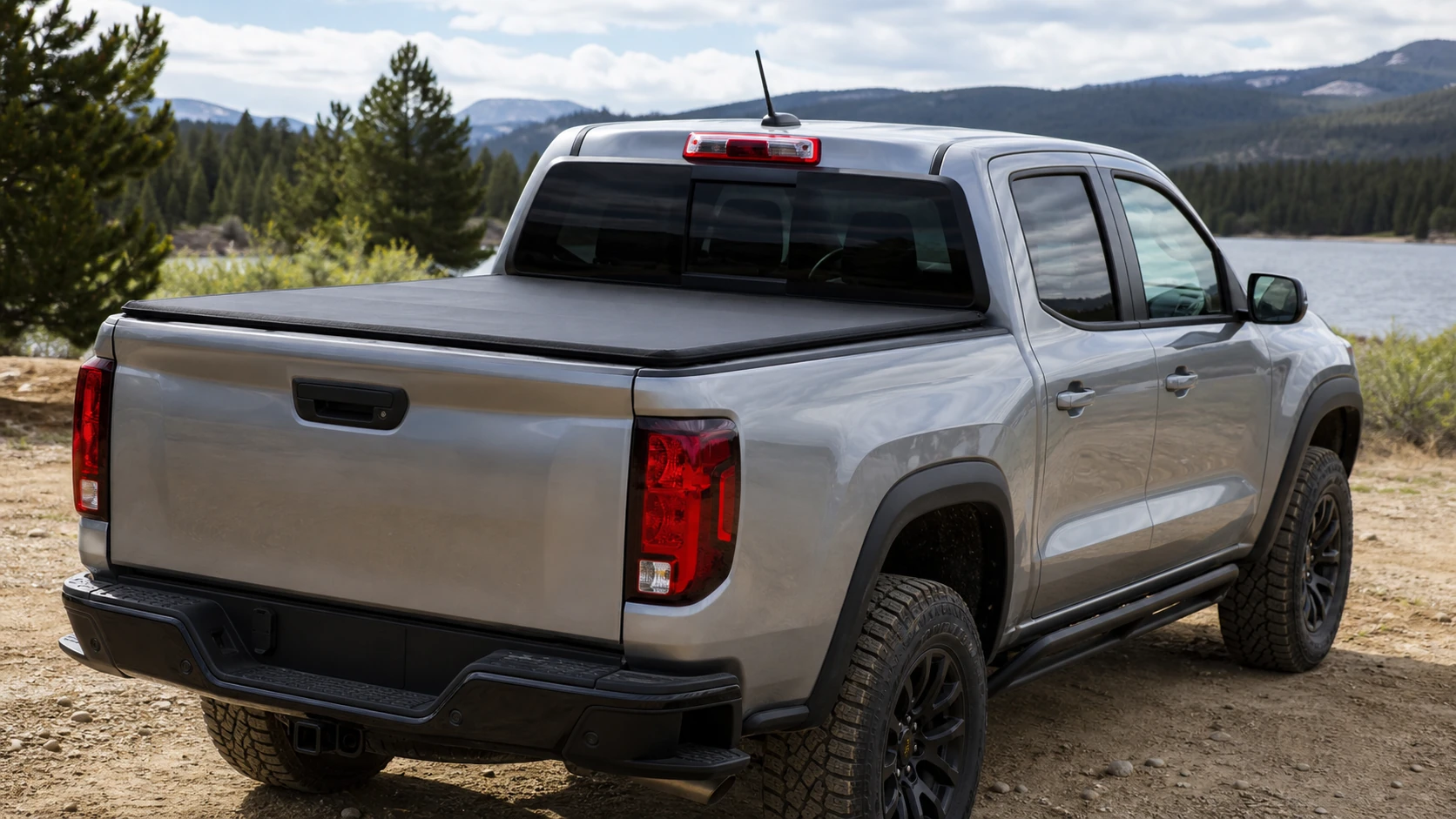
TruXedo offers more than one roll-up design, and product names, fabrics, rail profiles, latches, tension systems, and applications can change. This guide explains how to choose and use the format without treating any one listing as universal. Always verify the current application and installation manual for the exact part number before ordering.
Why a soft roll-up cover suits many Colorado owners
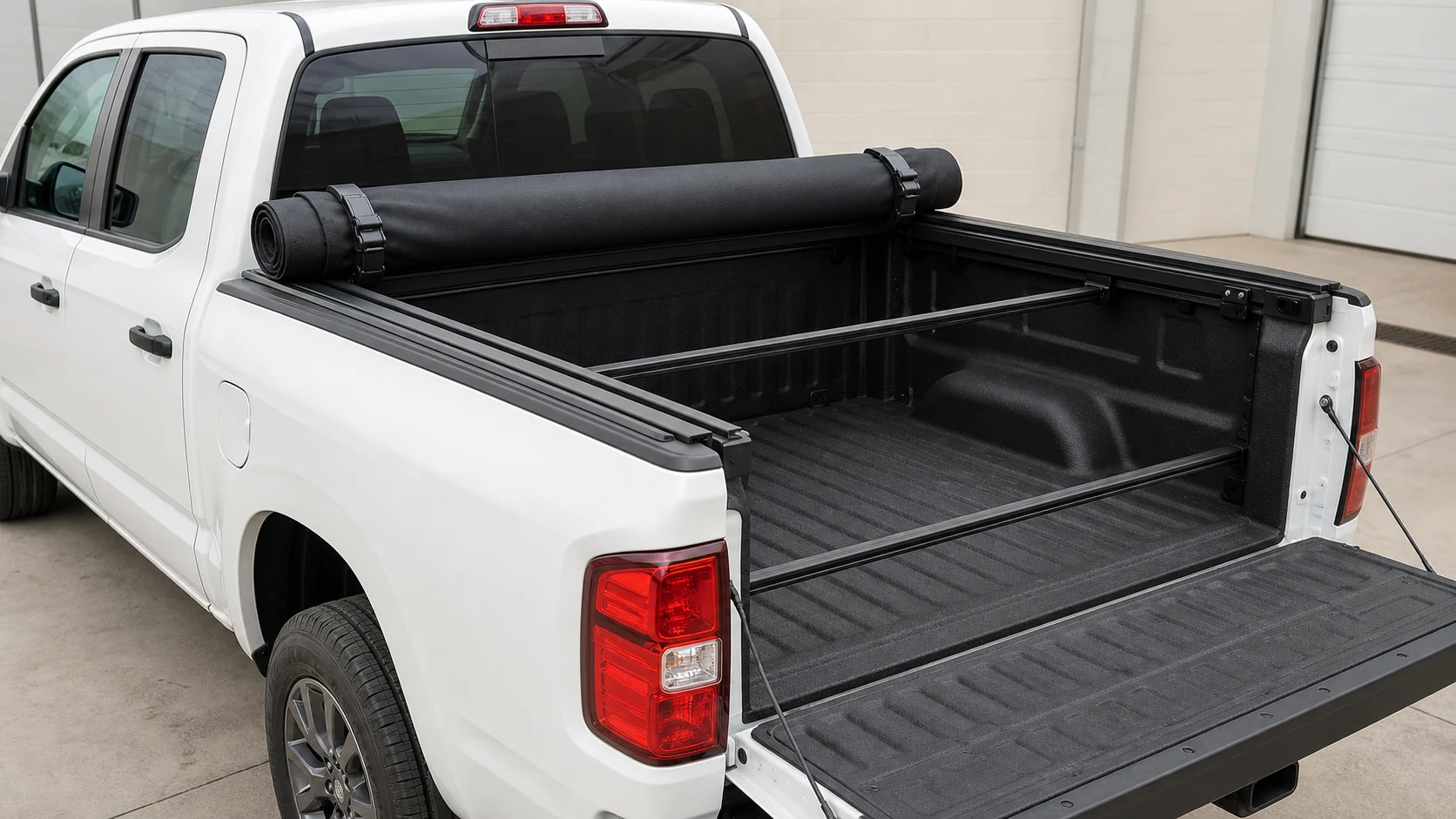
The main attraction is simple access. Release the rear latch, roll the cover toward the cab, and secure the roll with its straps. Most of the bed remains usable for bicycles, camping bins, renovation supplies, or other tall cargo. When closed, the cover hides ordinary gear and shields it from sun, road spray, and light weather.
A soft roll-up is generally easier to remove or handle than a hard folding or retractable assembly. It also avoids a large canister at the front of the bed. The tradeoff is security: fabric can be cut, and the system depends on a locked tailgate to limit access to its latches. Owners who routinely leave expensive tools in the bed may prefer a rigid cover or a separate locking toolbox.
Identify the Colorado before choosing a cover
Start with the model year and VIN, then measure the bed using the cover manufacturer’s method. Colorado generations use different bed dimensions and sheet-metal details. Even within a generation, short and long beds require different cover lengths. Do not rely only on a marketplace filter that says “fits Chevy Colorado.”
Check for factory or dealer-installed features that may affect the rails:
- Bedliner type and thickness.
- Upper bed-rail caps.
- Movable cargo tie-downs or a track system.
- Sport bar, chase rack, ladder rack, or stake-pocket mounts.
- Cross-bed toolbox or cargo divider.
- Factory electrical outlets or lighting near clamp locations.
- Tailgate accessories that change the sealing surface.
A spray-in liner is often compatible because it follows the bed shape closely. A drop-in liner can cover the inner lip required by the clamps. Some instructions allow limited trimming at marked locations; others require different hardware. Do not cut the liner until the exact manual confirms the procedure.
How a TruXedo-style roll-up system works
Two side rails clamp to the bed and support the cover edges. The fabric attaches to the rails with a hook-and-loop or similar fastening method while cross supports help maintain the shape. A rear header latches near the tailgate. An automatic or manual tensioning mechanism keeps the surface suitably taut across temperature changes, depending on the specific model.
To open the bed, lower the tailgate, release the latch, and roll the cover forward. The roll must be secured with the supplied straps before driving. To close it, unroll toward the tailgate, engage the rear header, and press the side edges into their fastening surfaces. Never drive with the cover loose or partly rolled.
Low-profile versus top-mount layouts
A low-profile cover places more of the rail inside the bed opening and creates a flush appearance. A top-mount design sits higher and may offer a different clamp arrangement or water path. Neither is automatically better. Consider how often wide cargo reaches the bed rails, whether another accessory uses the stake pockets, and how the chosen design meets the Colorado’s tailgate.
Compare actual rail diagrams and dimensions. Product photographs often show a different truck, so the image cannot establish how much usable width remains on a Colorado.
Installation priorities
- Prepare the bed. Wash and dry the bulkhead and rail surfaces. Remove loose liner material and identify the permitted clamp points.
- Position the rails. Set left and right rails at the height and setback in the manual. Keep them parallel from bulkhead to tailgate.
- Install clamps correctly. Place them in the specified structural locations and tighten in stages. Uneven tightening can twist a rail.
- Attach the cover assembly. Center the front header, verify seals make continuous contact, and connect any specified fasteners.
- Set tension and latching. Close the tailgate and cover in the required sequence, then make only the adjustments permitted by the manual.
- Test every operating position. Roll, secure, unroll, latch, and inspect before driving.
The cover should be taut but not stretched like a rigid panel. Forcing an over-tight surface can make the latch difficult to operate or increase stress in cold weather. A loose cover can flap and wear. Follow the specific tension procedure rather than adjusting by appearance alone.
Tailgate operation and latch access
Many roll-up covers are designed so the rear latch can be reached only after the tailgate is opened. That makes a working tailgate lock important. Confirm whether the selected model allows the cover to be closed with the tailgate already shut or requires a particular sequence. Forcing the header against a closed tailgate can damage a seal or latch.
If the Colorado has an assisted, damped, or accessory-modified tailgate, cycle it slowly during the first setup. Make sure cables, caps, and trim do not rub the cover rails.
Weather performance on a midsize pickup
A properly fitted cover reduces direct rain and road debris, but the Colorado bed still has seams and a tailgate gap. Expect weather resistance rather than a waterproof compartment. Keep electronics, documents, and other moisture-sensitive cargo in sealed containers.
Test leaks with a gentle hose. Begin at the bulkhead, then check rails and tailgate separately. Water at the front can indicate a bulkhead-seal gap. Entry along one side may point to a rail that is not level or a fastening surface contaminated with wax. Water near the tailgate may come from the truck rather than the cover.
Do not use a pressure washer close to seals or the hook-and-loop edge. High pressure can force water past a system that performs normally in rain. Remove snow and ice before rolling; frozen fabric and seals can tear when forced.
Security and cargo limits
A closed soft cover hides cargo, which is valuable in parking lots, but it should not be described as cut-resistant or theft-proof. Lock the tailgate, keep valuable tools in a secured container, and remove irreplaceable items overnight. Inspect the cover after any attempted entry.
The cover is not a cargo platform. Do not place luggage, lumber, people, or pets on it. Cargo in the bed should stay below the rail line when the cover is closed and must be tied to the truck’s cargo anchors. The rails and cover straps are not substitutes for load restraints.
Compatibility with racks and other accessories
Some rack systems use the stake pockets while leaving the inner bed lip available; others occupy the same space as the tonneau rails. Even when both products are described as low profile, the uprights may block the roll or prevent the side fastening surface from closing.
Use a documented compatible combination or compare engineering drawings for both products. The same caution applies to a toolbox. A standard full-length roll-up cover normally cannot close over a cross-bed toolbox unless it is specifically designed as a toolbox-compatible system.
Routine care
- Wash fabric with mild automotive soap and a soft cloth.
- Use only protectants approved for the exact cover material.
- Clean grit from side fastening surfaces before pressing them closed.
- Inspect clamps, latches, straps, stitching, end caps, and tension hardware.
- Recheck rail alignment after carrying a load that contacted the bed sides.
- Secure the roll every time the truck moves with the cover open.
Avoid silicone sprays, tire dressings, household solvents, and abrasive brushes unless the manufacturer explicitly allows them. An incompatible product can make the surface slick, attract dirt, or weaken adhesives.
Troubleshooting
The cover flaps: clean and fasten both sides, then check rail spacing and tension according to the manual. The rear header will not latch: inspect for an over-tight setting, rail misalignment, or cargo interference. One edge releases: clean the fastening surface and verify that the rail is not bowed. The roll shifts while driving: stop immediately and secure both retention straps; replace damaged straps before further use.
How to choose the right current model
Compare verified fitment first, then profile, rail intrusion, fabric care, tension adjustment, latch access, replacement-parts support, and warranty terms. Owners who open the full bed every week may value quick rolling and a compact bundle. Owners who prioritize break-in resistance may be better served by a rigid system. A Colorado carrying a rack or toolbox needs a documented compatible combination rather than separate products selected in isolation.
Bottom line
A TruXedo roll-up cover can be a practical match for the Chevrolet Colorado when the exact truck and bed are identified correctly. Precise rail installation, realistic security and weather expectations, proper cargo restraint, and routine latch and strap inspection make the system useful. The brand name alone is not a fitment specification; confirm the current part number for the Colorado generation, bed length, and accessories before purchase.