
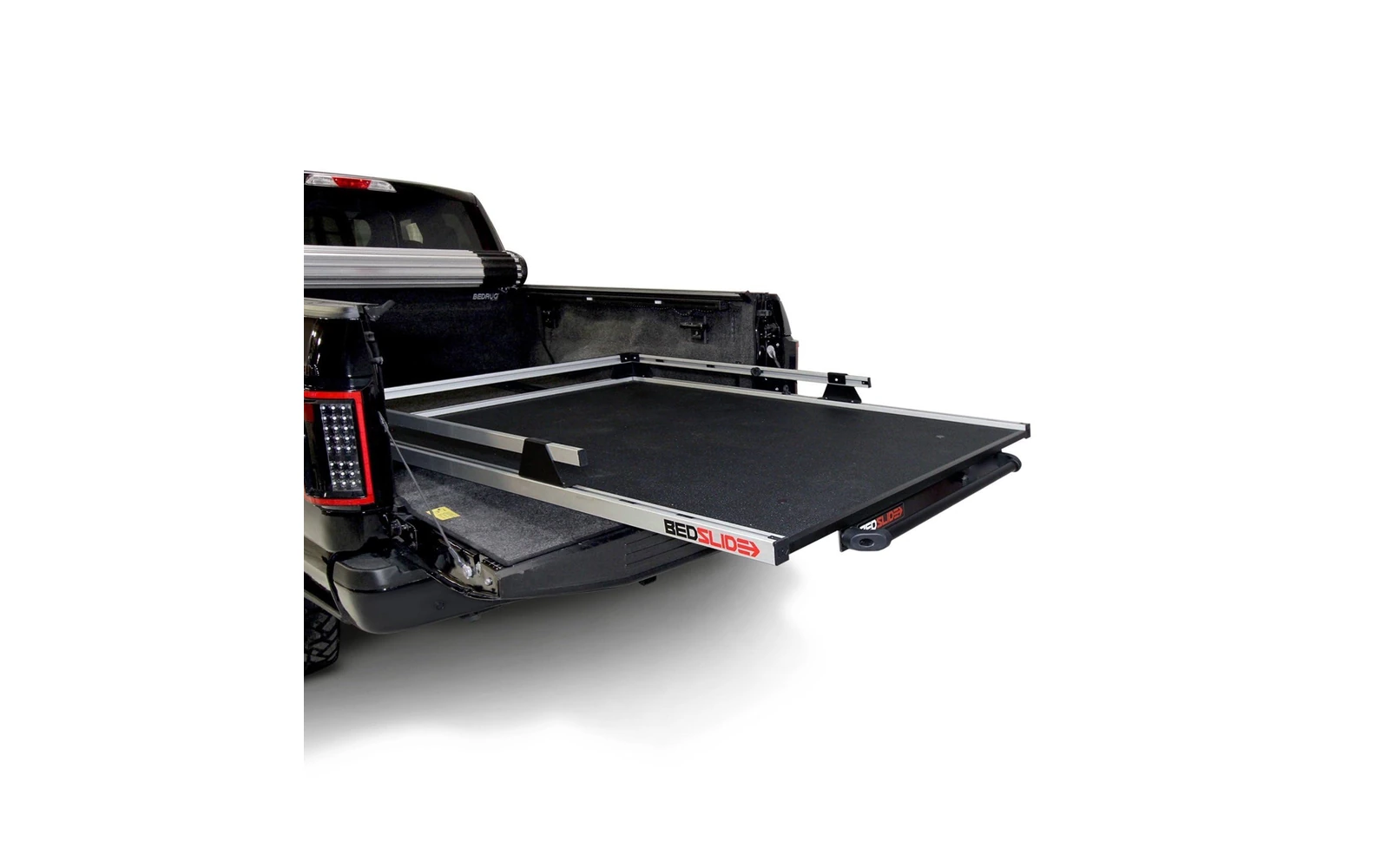
This 75 x 48 Contractor tray is a current heavy-use replacement for the legacy CG1500HD idea. It is intended for dense tools and equipment, but the truck's payload and rear-axle rating remain the real limit.
Fitment first
What to confirm before buying
Measure the actual usable bed floor, not the nominal box description. The tray needs at least the required 75-inch length and 48-inch width plus the clearances specified in its installation guide. Check the narrowest distance between wheel wells, the tailgate opening, front-wall shape, bed bolts, liner thickness, and the height of the tailgate in its open position. Allow space for the release handle and for the deck to move through every locking position. A 6.5-foot label does not guarantee fit because molded liners, tailgate steps, factory power outlets, cargo dividers, and tonneau clamps can intrude. The product listing describes the slide as useful beneath tonneau covers, but vertical clearance still has to be measured with the planned cargo and cover hardware in place. Confirm part 15-7548-CG rather than selecting by the 1,500-pound rating alone; the same capacity family includes different deck lengths and widths. Finally, calculate remaining payload with the 170-pound slide included.
Product at a glance
| Product | Bedslide 1500 Contractor |
|---|---|
| Deck | 75 x 48 inches |
| Rated tray capacity | 1,500 lb |
| Finish | Silver |
How this accessory works in practice
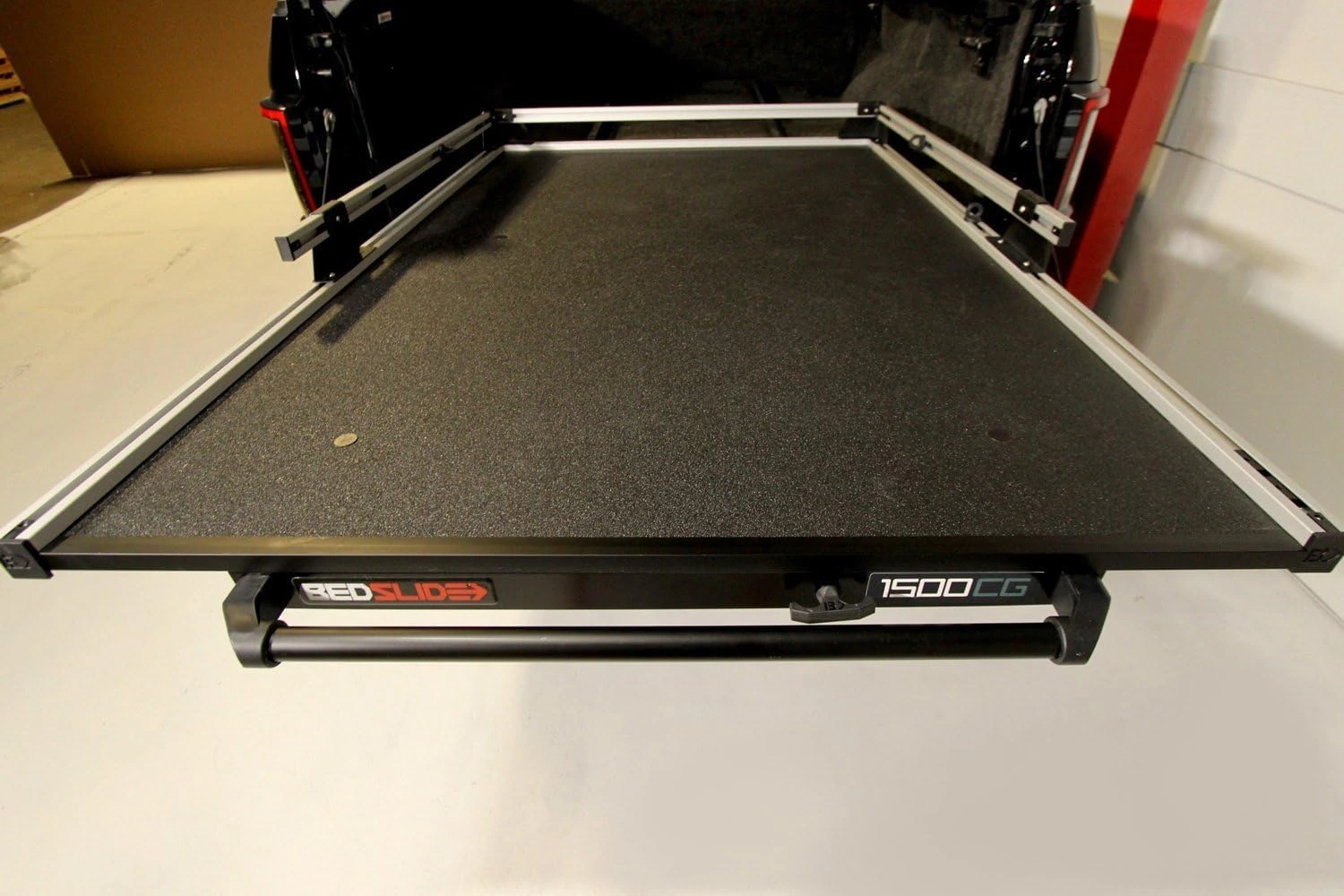
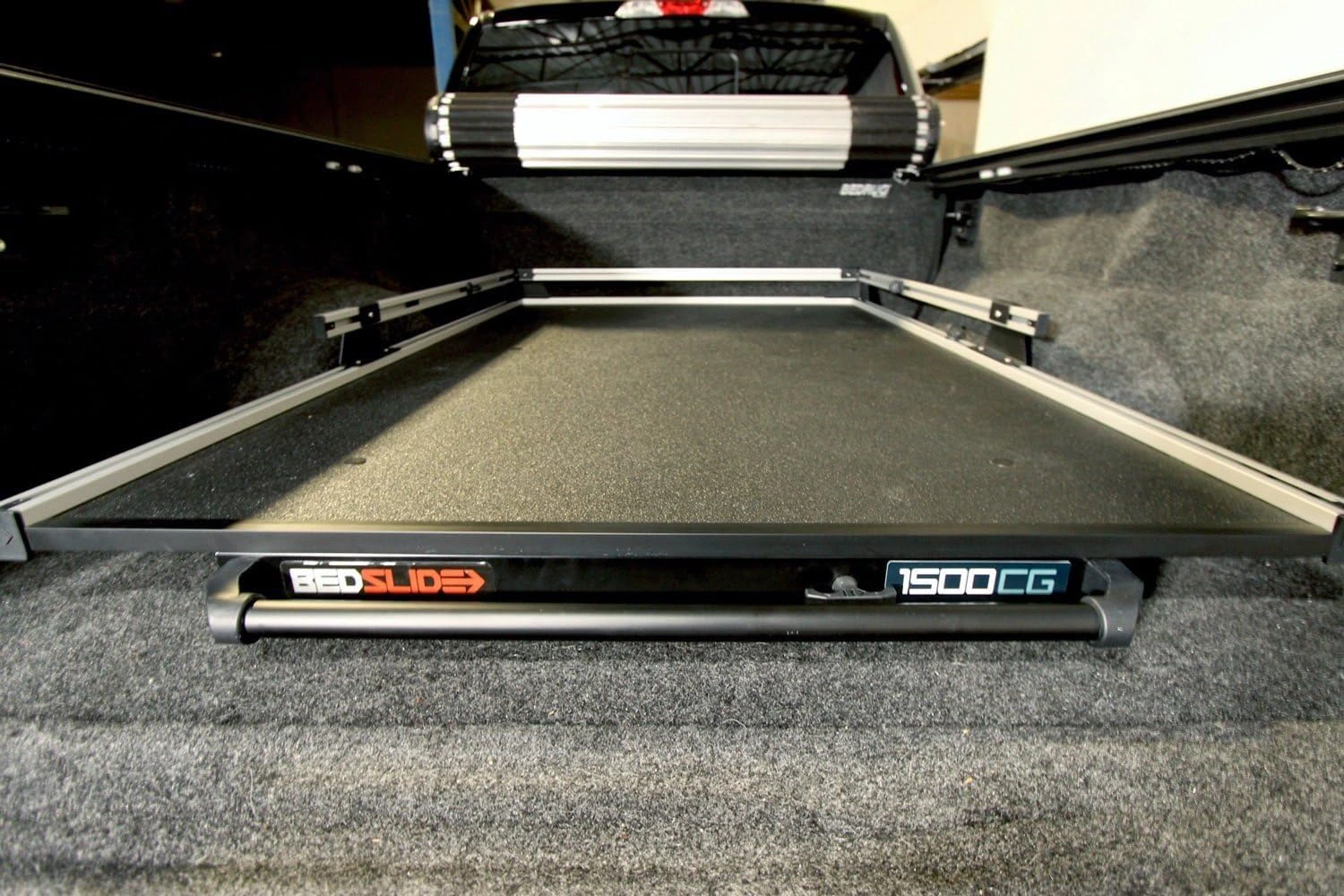
This page centers on the Bedslide 1500 Contractor in the 75-by-48-inch configuration, part 15-7548-CG, as a defined heavy-use alternative to the legacy CargoGlide CG1500HD concept. The product record gives the Bedslide a 1,500-pound evenly distributed tray rating, a silver finish, composite-and-metal construction, Weatherdeck composite decking, four D-ring tie-down locations, Bedtrax T-slots, and multiple pull-out locking positions. Its listed item weight is 170 pounds. The 75-inch deck is the key distinction: it preserves 1,500-pound-class organization while fitting a slightly shorter floor envelope than the 78-inch version. It is intended for dense service gear, cases, and job-site equipment that would otherwise be difficult to reach at the front of the bed. The tray rating applies to the platform, not the truck. A 170-pound accessory consumes payload before the first tool is loaded, and an extended tray changes leverage at the rear of the vehicle.
Daily use and ownership
The 75-inch Contractor is well suited to a service truck carrying power-tool cases, fastener bins, pumps, recovery gear, or field equipment in repeatable positions. Use the Bedtrax channels and four D-rings to restrain cargo in multiple directions, keeping the heaviest items low and distributed across the 48-inch width. Do not place the entire 1,500-pound load at the rear edge; the rating is stated for evenly distributed weight. Multiple pull-out locks let the user stop the deck at useful access points instead of extending it farther than necessary. Operate it only while parked, control the handle throughout travel, and keep people clear of the sides and underside. Before driving, return the platform fully into the bed, verify positive latch engagement, and tension the cargo restraints independently. A tonneau can hide the load from weather and view, but it does not prevent cases from shifting on the deck during braking or cornering.
Installation and setup
Plan the mounting around the load, not just the empty tray. Remove loose mats, dry-fit the 75-by-48 frame, and test the tailgate through a complete open-close cycle. Confirm that the handle, guard rail, tie-downs, and intended tonneau cover remain accessible. Inspect below the bed before drilling for fuel and emissions components, wiring, brake lines, frame sections, heat shields, spare-tire hardware, and existing fasteners. Use the supplied structural mounting method and backing hardware; do not rely on a plastic liner or thin unsupported sheet metal to carry a 1,500-pound-class assembly. Keep the slide rails square and parallel, tighten mounts in the prescribed sequence, and test every locking position with an empty deck. Add a modest, evenly spread load for the second check, watching for bed deflection, liner contact, or a change in latch alignment. Because the unit weighs 170 pounds before mounting hardware, use enough people or lifting equipment to place it without injuring installers or damaging bed sides.
Care and maintenance
Sweep debris from the Weatherdeck surface and moving tracks, and rinse away salt or job-site chemicals before they remain trapped around metal edges. Inspect the four D-rings, Bedtrax channels, guard rail, latch, handle, rollers, rail fasteners, and vehicle mounting points. Replace a damaged cargo restraint rather than tying around an unapproved part of the frame. Follow the manufacturer procedure for lubrication because the wrong product can hold abrasive dust. Changes in pull effort, new rattles, uneven locking, or visible deck movement call for unloading and inspection before further use. Recheck the payload calculation whenever permanent equipment is added to the truck.
Buy it when
- Buy the 75-by-48 Contractor when measurements support that exact footprint, the truck can absorb the 170-pound platform plus planned cargo, and organized access to dense service equipment matters more than preserving an empty bed floor. It is the more space-conscious 1,500-pound option in this group and works well where a 78-inch deck is too close to the available length.
Skip it when
- Skip it when the usable floor is under 75 by 48 inches, the mounting area cannot be accessed safely, or the payload and rear-axle calculation leaves inadequate capacity. Choose the 1,000- or 1,200-pound class for lighter recreational cargo, and do not pay for 1,500-pound capacity if the vehicle can never use it.
Frequently asked questions
Will the 75-by-48 tray fit any truck advertised with a 6.5-foot bed?
No. Nominal bed labels round dimensions and do not account for wheel wells, liner shape, tailgate hardware, or the space required by the release mechanism. Measure the usable floor and opening, then compare those numbers with the installation drawing for part 15-7548-CG. Dry-fit before making permanent holes.
Can the full 1,500 pounds be concentrated in one tool chest?
The stated rating is for an evenly distributed load. Concentrating dense weight in a small area can overload the deck, mounting points, bed floor, or rear axle even when the total is below 1,500 pounds. Spread heavy cases, secure them at several points, and use the truck and tire limits as additional ceilings.
How much payload does the empty platform use?
The product record lists the 75-by-48 Bedslide at 170 pounds. That weight becomes permanent cargo once installed and must be counted with passengers, fuel-dependent payload calculations, bed covers, racks, tools, and carried material. Use the specific truck's label and axle weights rather than subtracting from a generic brochure maximum.
Can this Bedslide operate under a tonneau cover?
The product information presents it as compatible with tonneau-cover use, but that is conditional. The cover rails and clamps must clear the 48-inch tray, and the stacked cargo must remain below the closed cover. Check release-handle access and make sure neither system's mounting hardware occupies the other's structural attachment area.
Related fitment guides
- Bedslide 1500 Contractor 78 x 48 Sliding Truck-Bed Organizer
- Bedslide 2000 Heavy-Duty 78 x 48 Truck-Bed Organizer
- BAKFlip MX4 448207 for Ram 1500 5 ft 7 in Bed: Fitment Review
Technical reference
Application and technical details were checked against Sliding-tray technical specification reference. Use the manufacturer application data and the vehicle’s own measurements as the final fitment check.