
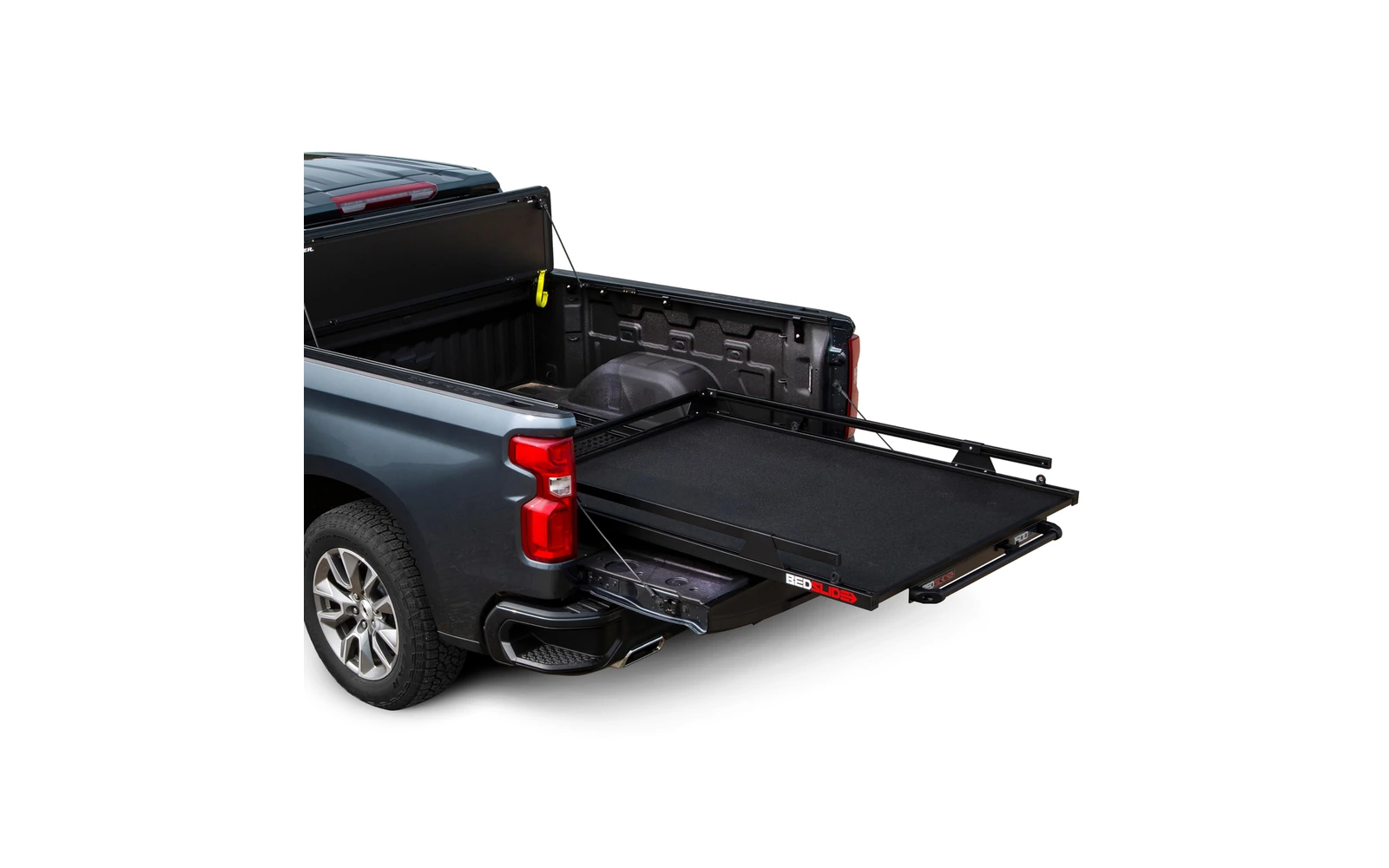
The 2000 Heavy-Duty is the highest-capacity current tray in this rebuilt group. It is appropriate for dense service equipment only when the truck, bed structure, axle and tires can carry the combined platform and cargo weight.
Fitment first
What to confirm before buying
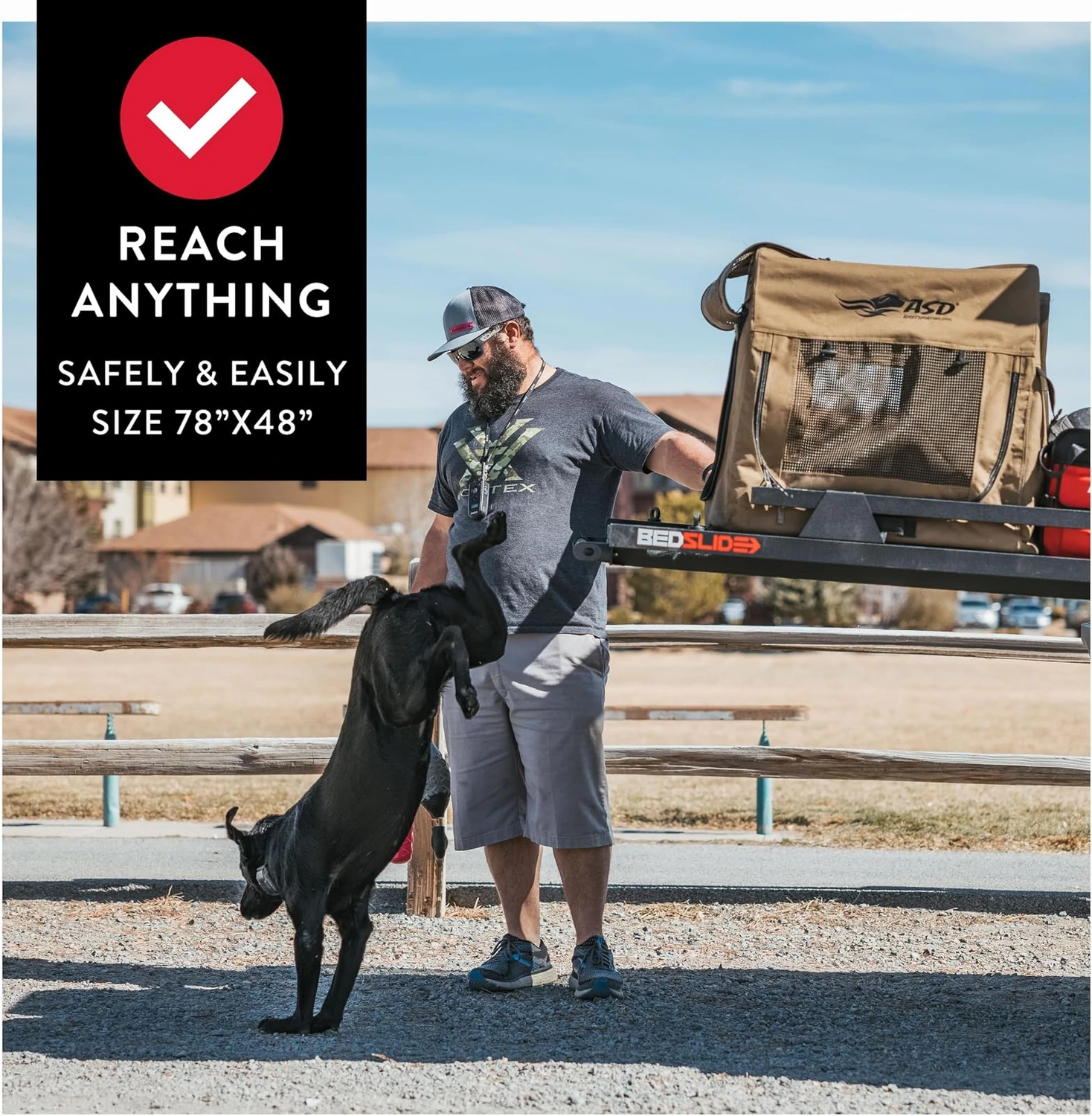
The 78-by-48 footprint requires the same careful dimensional check as the 1,500-pound long Contractor, plus a more conservative structural and payload review. Measure usable bed length, narrowest wheel-well width, tailgate opening, front-wall contour, liner interference, and handle clearance. Confirm model 207848HDB and retain the model-specific mounting plan. A tonneau cover may provide weather coverage only if its rails, clamps, and closed height clear both the platform and loaded equipment. Before buying, use the truck's payload label and ratings for GVWR, front and rear GAWR, and tires. Better still, weigh a commercial truck by axle with passengers, fuel, body equipment, hitch, racks, and other permanent accessories in their normal configuration. Add the slide's listed 166 pounds, then model the planned cargo location. Many half-ton pickups cannot use the full 2,000-pound tray rating after the platform and normal equipment are counted; the vehicle limit remains controlling.
Product at a glance
| Product | Bedslide 2000 Heavy-Duty |
|---|---|
| Deck | 78 x 48 inches |
| Rated tray capacity | 2,000 lb |
| Finish | Black |
How this accessory works in practice
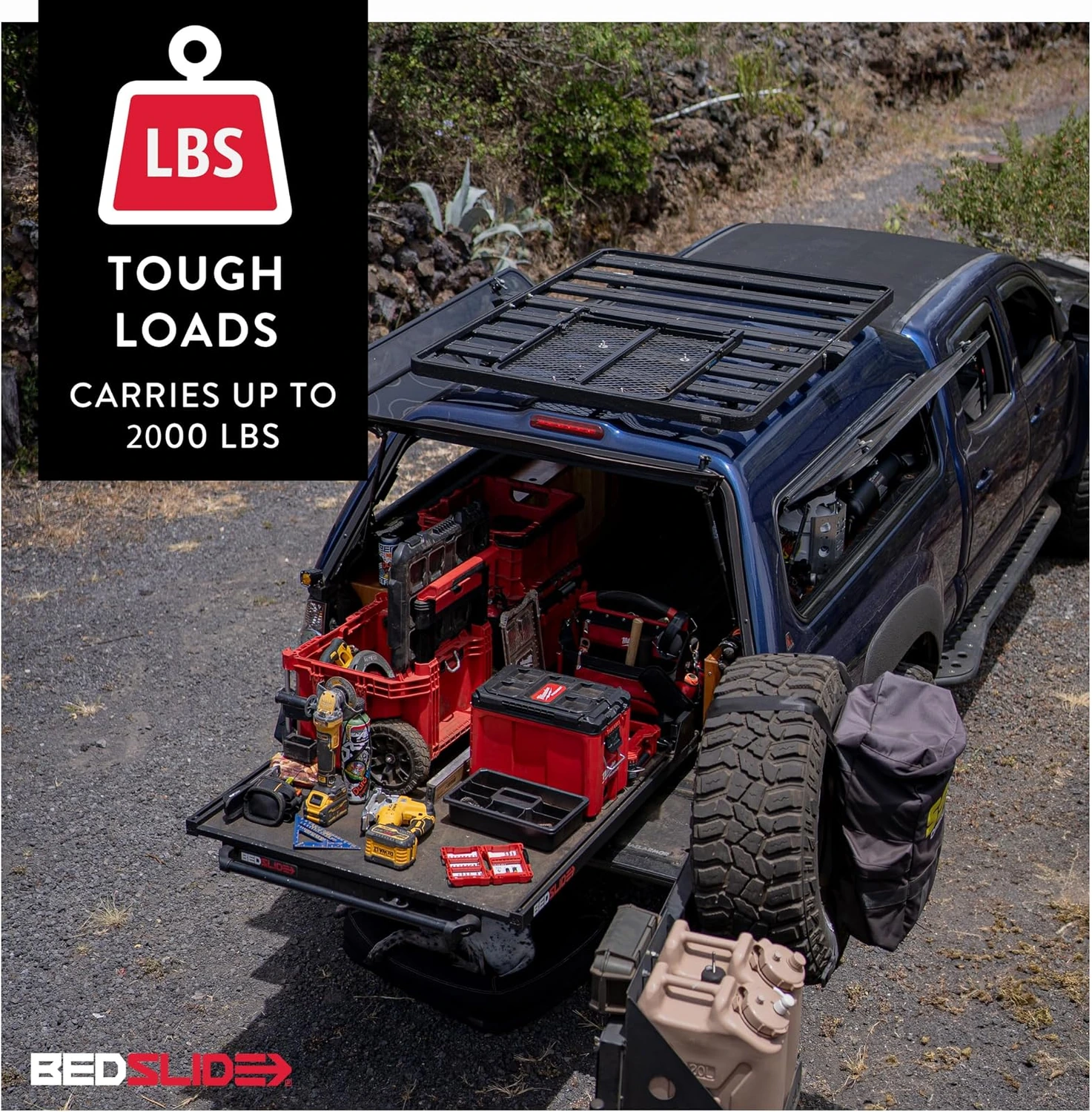
Bedslide 2000 Heavy-Duty model 207848HDB is the highest-capacity platform in this group. Its product record specifies a 78-by-48-inch deck, black finish, 166-pound item weight, and a 2,000-pound capacity for weight distributed across the tray. Weatherdeck composite decking, Bedtrax T-slots, four D-ring tie-down locations, and multiple pull-out locking positions support organized professional cargo. This is not simply the silver 1,500-pound Contractor with a different label. It is intended for denser equipment, but the larger tray rating does not increase the pickup's payload, GVWR, rear GAWR, tire capacity, or bed-floor strength. The legacy text attached to this page repeated CG1500XL language, including a 1,500-pound figure. That information describes the wrong capacity class and should not guide selection of model 207848HDB. The accurate decision starts with the 2,000-pound tray rating, then reduces the usable load to whatever the fully equipped vehicle can actually support.
Daily use and ownership
This model is suited to dense professional loads such as welding gear, pumps, compressors, industrial tooling, large parts inventories, or grouped service cases, provided the truck and mounting system are rated for the total. Build a load map instead of treating the deck as an undifferentiated one-ton bin. Spread equipment over the 78-by-48 surface, place the densest pieces low and near the centerline, and restrain them through the approved D-rings or Bedtrax-compatible fittings. The evenly distributed rating does not support a 2,000-pound point load, and the extended platform creates greater rearward leverage. Operate the slide only while parked, use the closest practical locking position, and keep workers outside pinch and travel zones. Stow the tray completely before driving, confirm the latch mechanically engages, and inspect every restraint. Locking the slide controls the platform; it does not secure each machine or case on top of it.
Installation and setup
A 2,000-pound-class tray deserves a documented structural installation. Dry-fit the frame, open and close the tailgate, and confirm clearance at the front wall, wheel wells, liner, tonneau hardware, and release handle. Inspect below the bed for the fuel tank and filler, electrical harnesses, brake lines, exhaust and emissions components, frame geometry, spare-tire hardware, and existing body mounts. Use the manufacturer-specified template, backing system, fasteners, and torque values for 207848HDB. Do not substitute light sheet-metal anchors or assume that a drop-in liner distributes load. Align both rails precisely and tighten them in sequence so the platform does not rack. Cycle the empty tray through all lock positions before loading. Increase test weight gradually and distribute it, checking for bed-floor distortion, bolt movement, rail deflection, tire clearance, and changes in latch action. Professional installation is a reasonable choice when the truck is commercial, the bed has been modified, or the intended load approaches vehicle limits.
Care and maintenance
Heavy equipment magnifies small defects, so inspect more than the deck surface. Remove grit from tracks and locking points, rinse corrosive residue, repair damaged protective finish, and check the composite deck for crushed or separated areas. Examine every D-ring, Bedtrax attachment, guard rail, release component, roller, frame joint, mounting bolt, and bed reinforcement. Follow the specified lubrication procedure and keep oil away from surfaces where it would attract abrasive debris. Any unexplained increase in pull force, uneven extension, new noise, shifted bolt mark, or incomplete latch engagement requires unloading and correction. Reweigh the truck whenever the permanent service inventory changes materially.
Buy it when
- Select model 207848HDB when the measured bed fits 78 by 48 inches, the work genuinely requires more than the 1,500-pound tray class, and axle-scale or label-based calculations show that the vehicle can carry the 166-pound platform plus the planned distributed load. It belongs in a deliberately engineered service setup, not an estimate based on bed volume.
Skip it when
- Skip it when the vehicle cannot exploit the higher capacity, when cargo consists mainly of light recreational bins, or when the bed lacks safe structural mounting access. The 1,500-pound Contractor offers the same nominal deck footprint for less demanding loads. Do not select the 2000 model merely to create a false safety margin over a truck that is already payload-limited.
Frequently asked questions
Does the 2,000-pound rating mean the truck can carry a full ton on the slide?
No. It is the tray's evenly distributed capacity, not the vehicle's payload allowance. The truck must carry the 166-pound slide, occupants, accessories, and cargo while remaining within GVWR, rear and front GAWR, tire ratings, and any bed or mounting limits. The smallest remaining limit determines the usable cargo weight.
How does model 207848HDB differ from the 78-by-48 Contractor?
Both records specify a 78-by-48 deck and list a 166-pound item weight, but their load classes and finishes differ. The Heavy-Duty model is black and rated for 2,000 pounds evenly distributed; the silver Contractor is rated for 1,500 pounds. The extra 500 pounds is useful only when the vehicle and installation support it.
Is the 2000 Heavy-Duty appropriate for a half-ton pickup?
Fit cannot be decided from the half-ton label alone, but many half-ton payload configurations cannot use the full tray rating after the slide, passengers, and equipment are counted. Check the exact door-jamb label, axle and tire limits, and preferably loaded axle weights. A physically fitting deck can still be an unsuitable load match.
When is professional installation justified?
Professional mounting is sensible when the tray will carry dense commercial equipment, the bed has a liner or prior modifications, under-bed clearance is difficult to inspect, or reinforcement requirements are uncertain. The installer should follow the model-specific hardware and torque instructions and document that fuel, wiring, brake, exhaust, and spare-tire systems remain clear.
Related fitment guides
- Bedslide 1500 Contractor 75 x 48 Sliding Truck-Bed Organizer
- Bedslide 1500 Contractor 78 x 48 Sliding Truck-Bed Organizer
- THE DUMP BED KIT GUIDE: BEST PICKUP DUMP BED KITS YOU EVER FIND
Technical reference
Application and technical details were checked against Heavy-duty sliding-tray technical reference. Use the manufacturer application data and the vehicle’s own measurements as the final fitment check.