
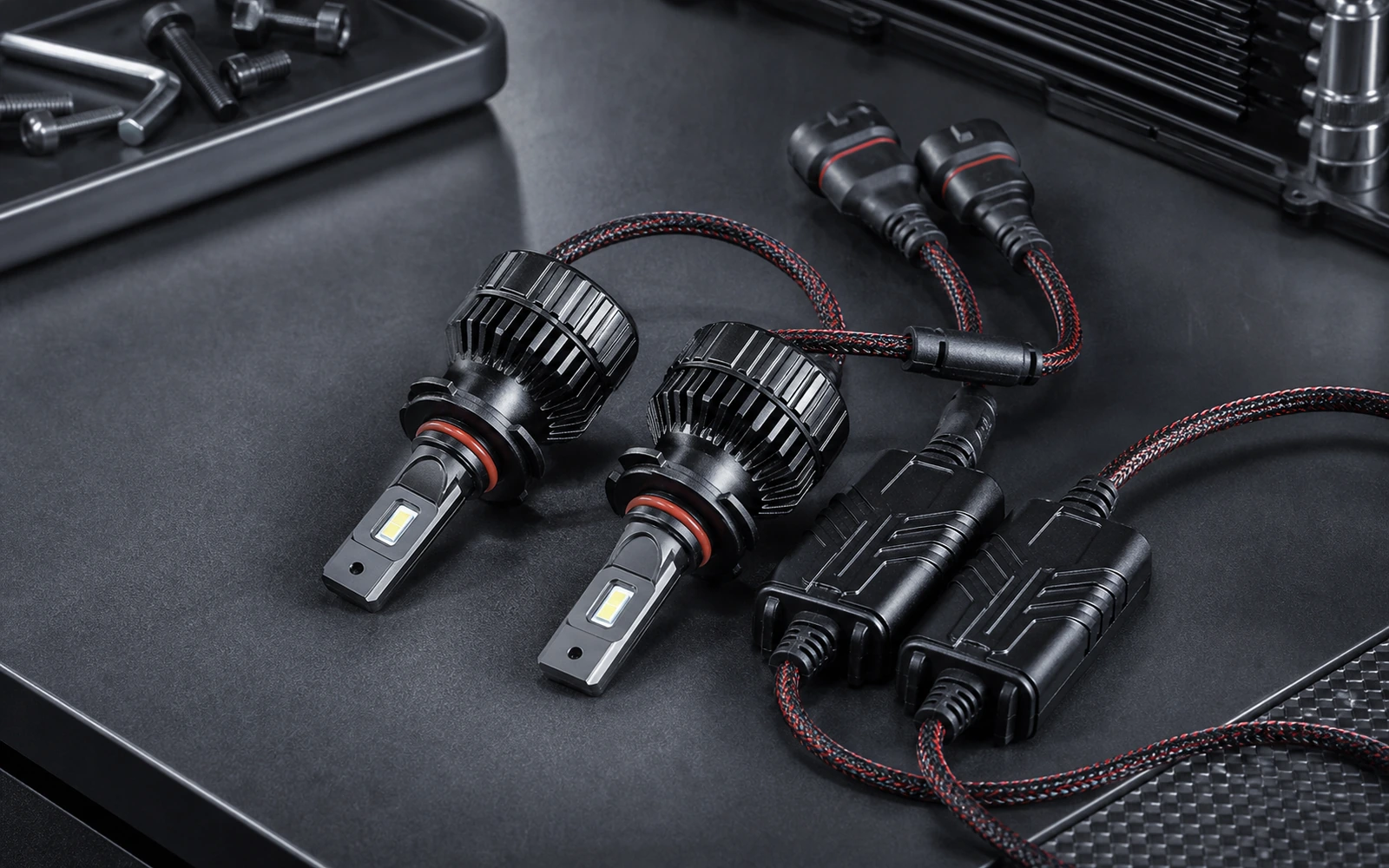
Lightning Eyes was a distinctive colored LED lighting accessory rather than a modern road-illumination headlight bulb. Availability is now limited, so buyers should treat it as a legacy show-light product and verify local color rules.
Fitment first
What to confirm before buying
Start by distinguishing bulb type from accessory type. The specification field calls the light source LED, but there is no H10, H11, 9005, or other replaceable-bulb base because this is a flexible strip. Measure the intended 19-inch path, check the bend radius, and confirm a flat, clean adhesive surface. The strip must not cover the headlamp lens, a vent, an aiming mechanism, or a service opening. If it is placed near or inside a lamp assembly, confirm housing clearance and do not drill or open a sealed housing without documented instructions. Wiring fitment requires identifying the correct circuit with a meter and understanding whether the vehicle uses conventional 12-volt switching, pulse-width modulation, or module-controlled lighting. Beam pattern remains the job of the factory bulb and reflector or projector. Legality is separate: green forward-facing lighting and nonstandard turn-signal colors are restricted in many jurisdictions, so public-road use must be checked before connection.
Product at a glance
| Legacy model | PlasmaGlow 10872 |
|---|---|
| Color | Green |
| Use | Decorative headlight accent |
| Electrical check | Controller, fuse and weather sealing |
How this accessory works in practice
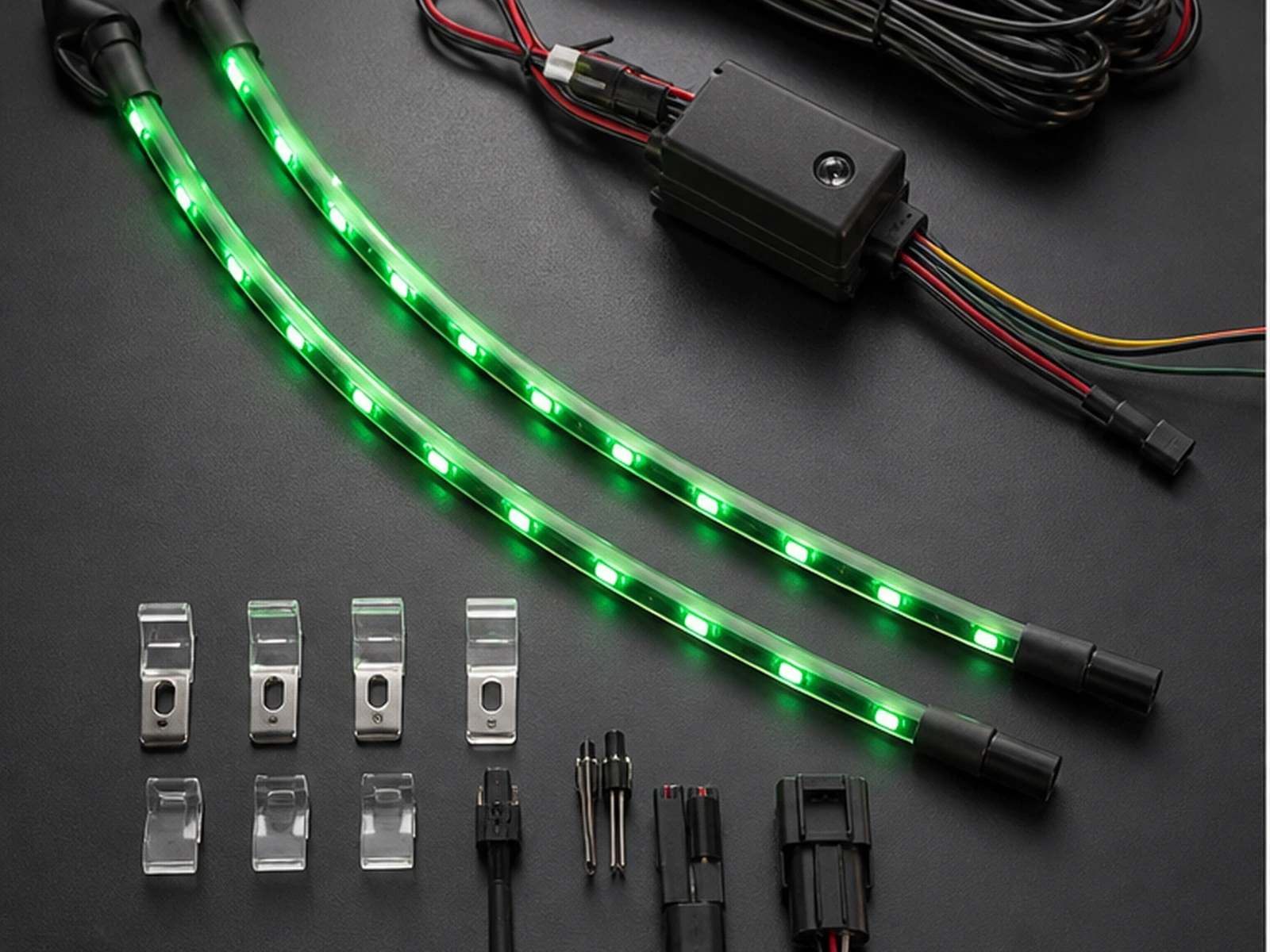
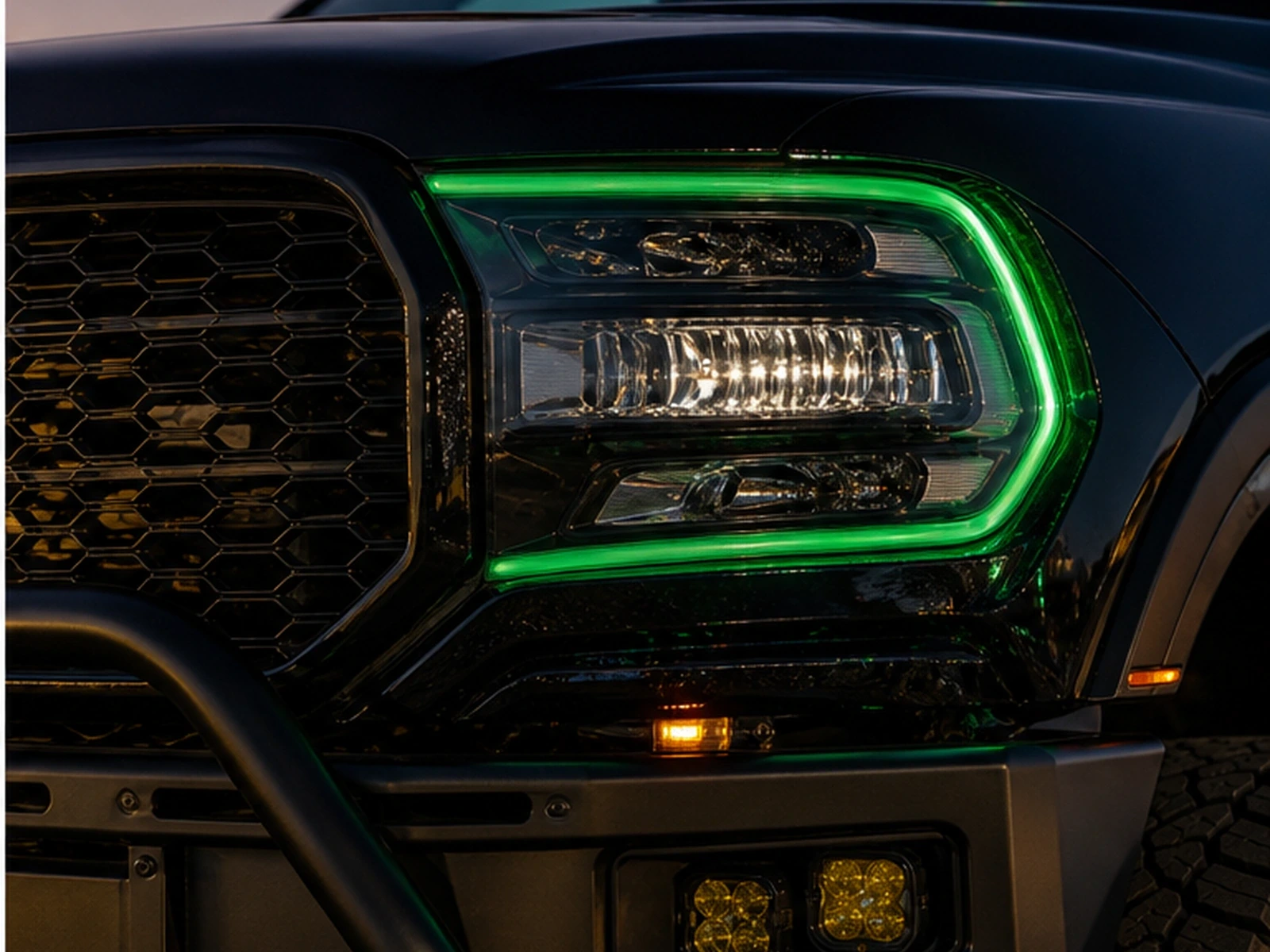
PlasmaGlow model 10872 is a pair of green Lightning Eyes LED accent strips. It is not a headlight bulb conversion kit and does not replace a low-beam or high-beam light source. Each strip is listed at 19 inches, emits light at a right angle to its mounting surface, and is thin enough to sit along narrow trim areas. The product description says the strips can be shortened to fit and can be connected with running lights, headlights, or turn-signal circuits. That flexibility explains the universal label, but universal does not mean vehicle-specific, plug-and-play, or legal for every use. The green output makes this best treated as a legacy show or off-road accent. The vehicle's original headlamp must still provide its normal road beam, and the strip should never be presented as improving headlight reach, cutoff, or seeing distance.
Daily use and ownership
Choose one operating role and label the wiring accordingly. A running-light connection keeps the strips on with that circuit, a headlight connection follows the lamps, and a turn-signal connection makes them flash with the selected signal. The fact that a connection is electrically possible does not make the resulting color or function road-compliant. A green strip flashing with a turn signal should not be assumed to satisfy an amber-signal requirement. Keep the accent disabled on public roads wherever the color or placement is not permitted. Inspect the primary headlamp from the driver's seat and from outside the vehicle after installation. The strip should not create a distracting windshield reflection, mask a side marker, overpower a required signal, or add stray light that makes the main beam harder to read. Use it as a styling element, not as emergency, warning, or road-illumination equipment.
Installation and setup
Plan the complete circuit before attaching the strips. Verify polarity and the selected trigger wire with proper test equipment rather than piercing random wires. Use a correctly sized fuse close to the power source, weather-resistant connections, and strain relief. Route wires away from fans, belts, hinges, sharp edges, and exhaust heat. Clean and dry the mounting surface, then dry-fit both strips so the left and right sides align. The description allows shortening, but cutting is irreversible; follow the product's exact cutting instructions and do not guess if approved cut points are not identified. Test the full strip before and after shortening. Press the adhesive evenly without stretching the strip around a radius it cannot hold. Seal exposed connections as instructed. Do not compromise a headlamp housing seal or dust cap merely to hide wires. After installation, test every lighting mode with the engine off and running, then confirm that no warning lamp or flicker appears.
Care and maintenance
Wash the strips gently with products safe for nearby paint, plastic lenses, and adhesive. Avoid directing a pressure washer at strip edges or electrical connections. Inspect for lifted adhesive, cracked insulation, water entry, dim sections, discoloration, and chafed wiring. Repair a loose strip before driving; air flow can pull it into moving parts or across a lamp lens. Recheck the fuse holder and ground if both strips fail. If only part of a strip fails after it was cut, inspect the permitted cut end and seal. Any installation that causes flicker, repeated fuse failure, lighting-module faults, radio interference, or abnormal heat should be disconnected until the circuit is diagnosed.
Buy it when
- Buy model 10872 if you specifically want a green decorative strip for a show, display, or off-road build, have a measured mounting path, and can create a fused and weather-protected circuit. It also makes sense when you understand that the two 19-inch strips are accents rather than headlight upgrades and can keep them disabled wherever public-road rules require it.
Skip it when
- Skip it if your goal is stronger low-beam or high-beam illumination, a defined cutoff, or a direct replacement bulb. Choose another approach if the vehicle has no safe adhesive surface, uses lighting electronics you cannot verify, or would require opening a sealed headlamp. It is also unsuitable when you need a clearly road-legal white running light or compliant amber turn signal, because the documented model is green.
Frequently asked questions
Is Lightning Eyes model 10872 a replacement headlight bulb?
No. It is a pair of flexible green LED accent strips. It has no vehicle bulb base and does not replace or create the low-beam or high-beam pattern produced by the headlamp housing.
Can the 19-inch strips be cut shorter?
The product description says they can be cut to fit. Shorten them only according to the supplied cutting instructions and identified cut locations. Test first, because an incorrect cut can disable part or all of a strip.
Can the green strips be used on public roads?
Do not assume so. Forward-facing green lighting is restricted in many places and may be reserved for particular vehicles or uses. Check the applicable rules for color, placement, brightness, and operating mode, and keep the strips disabled where required.
Will the strips change the headlight beam pattern?
They are not designed to form the road beam. The factory bulb and reflector or projector still control that pattern. Poor placement can add glare, reflections, or obstruction, so keep the strip clear of the optical lens and verify the main beam afterward.
Related fitment guides
- Oracle LED Headlight Kits
- Heise H10 Pro LED Conversion Kit: 16,000-Lumen Review
- THE DUMP BED KIT GUIDE: BEST PICKUP DUMP BED KITS YOU EVER FIND
Technical reference
Application and technical details were checked against Current automotive LED installation baseline. Use the manufacturer application data and the vehicle’s own measurements as the final fitment check.