
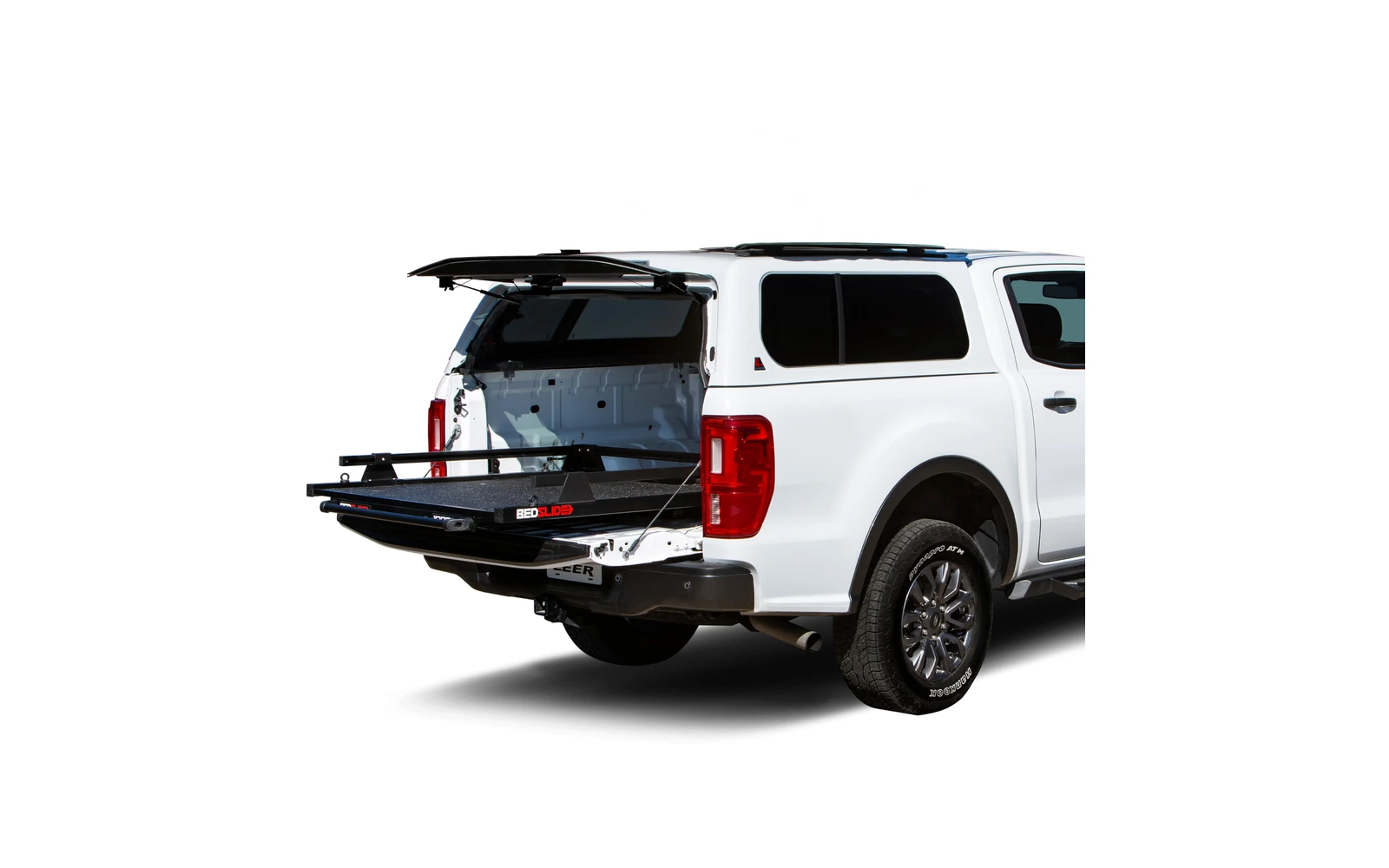
The CG1000 is the entry model in the old CargoGlide range and suits lighter recreational or service loads. A current Bedslide 1000 Classic is the closest readily available replacement in the same 1,000-pound class.
Fitment first
What to confirm before buying
For an original CG1000, obtain the exact deck size and unit label because the archived page says the family was supplied in stock sizes for trucks, vans, and SUVs. Do not assign the 79-by-48-inch Bedslide comparison dimensions to an unidentified CargoGlide. Measure floor length with the tailgate closed, narrowest width between the wheel wells, width through the tailgate opening, and vertical clearance over the tailgate. Check whether the 4-inch rails, recessed handle, and latch can move without striking a tonneau rail or rear door threshold. For the 79-by-48 comparison unit, confirm both dimensions against the vehicle rather than relying on a nominal 6.5-foot bed label. Inspect drop-in liner ribs, drawer systems, seat mounts in a van or SUV, and any underfloor obstacles before planning attachment points. Payload fitment is equally important: use the door-jamb payload label and axle ratings for the exact vehicle, then reserve capacity for passengers and every permanent accessory.
Product at a glance
| Legacy model | CargoGlide CG1000 |
|---|---|
| Current comparison | Bedslide 1000 Classic 79 x 48 |
| Rated class | 1,000 lb |
| Purpose | Sliding bed-access platform |
How this accessory works in practice
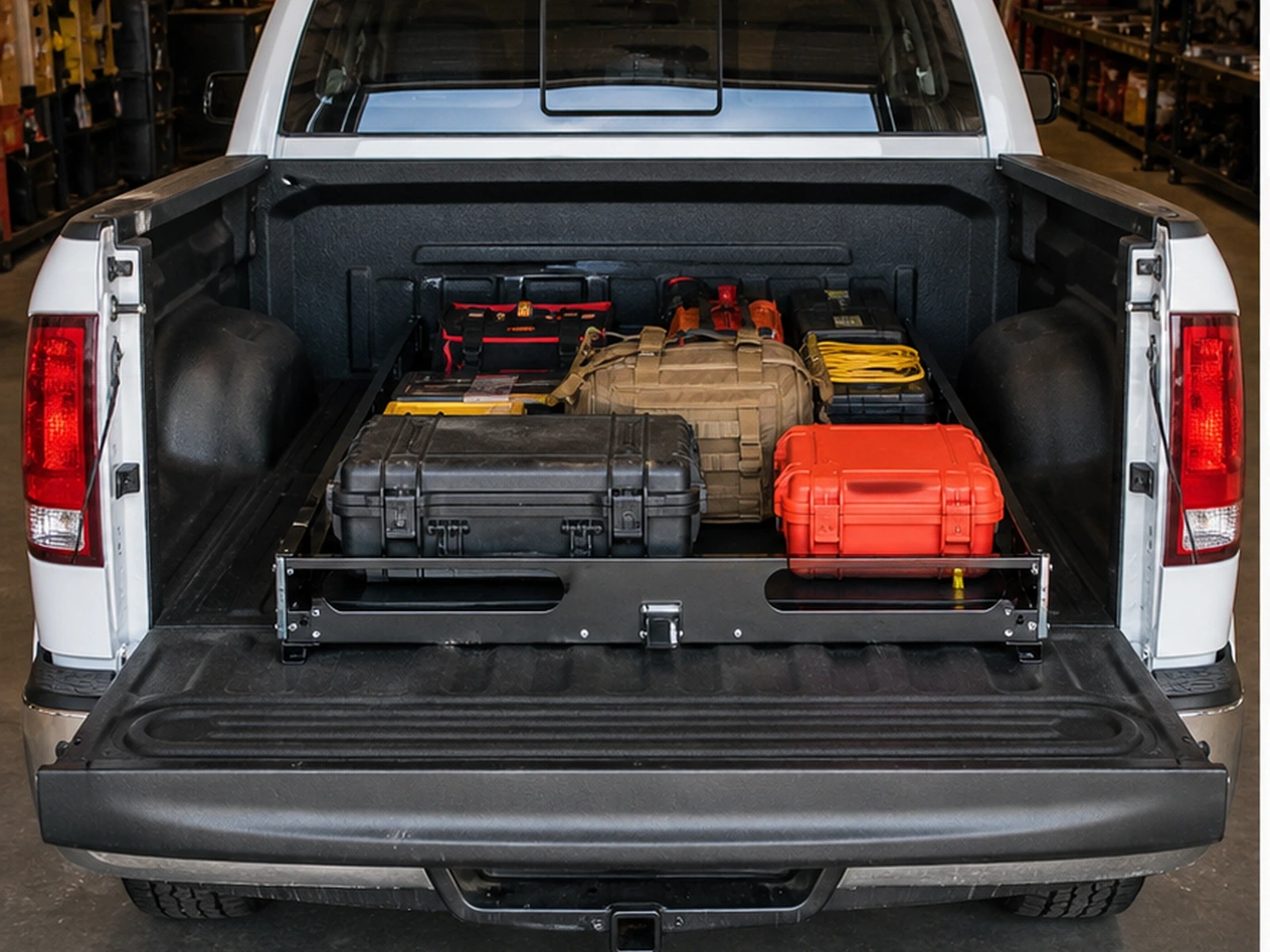
The legacy CargoGlide CG1000 was the lighter-duty entry in its product range. Archived specifications describe a powder-coated steel frame, a 1,000-pound capacity, approximately 70 percent extension, a sprayed bedliner-type deck coating, 4-inch side rails with T-slots, four tie-downs, built-in height adjustment, six roller bearings, and side-thrust bearings. That package targets recreational and light commercial access rather than the densest contractor loads. The rebuilt page uses a Bedslide 1000 Classic with a 79-by-48-inch deck as a readily identifiable comparison in the same capacity class; it should not be presented as the same product or as proof of the dimensions of every CG1000. Both solve the same basic problem by moving cab-end cargo toward the user, but brand, deck dimensions, mounting hardware, extension details, and replacement parts can differ. A 1,000-pound tray is still a substantial accessory, and its own weight must be deducted from the truck's available payload before cargo is added.
Daily use and ownership
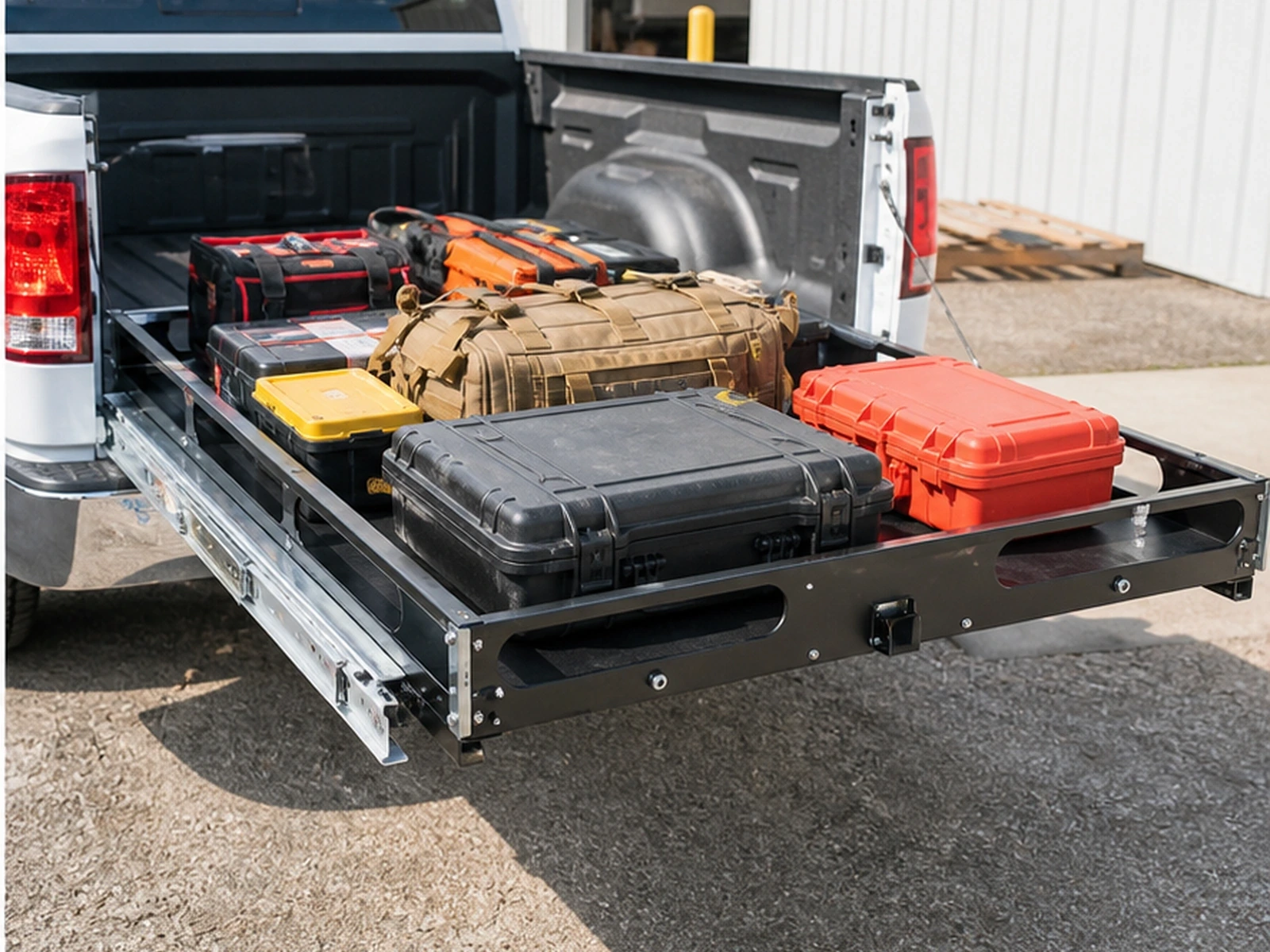
CG1000 suits loads such as camping totes, coolers, photography cases, mobile-repair kits, garden supplies, or boxed parts that are awkward to reach but do not require the next capacity class. Use the deck's tie-downs and T-slots to create repeatable positions for containers instead of allowing them to migrate toward the tailgate. The stated 70 percent extension keeps a portion of the platform inside the vehicle, so store the most frequently used cases nearer the rear half and less frequent items toward the cab. Pull the tray only when parked and keep hands, straps, and loose clothing away from the rollers and latch path. Side-thrust bearings were described as helping movement when the vehicle is not perfectly level, but that is not an invitation to release a loaded tray on a steep side slope. Control its travel, use each intended latch position, and verify the tray is fully stowed and the cargo independently restrained before moving the vehicle.
Installation and setup
Although the archived units were described as arriving largely assembled, vehicle installation still requires accurate structural mounting. Dry-fit the empty platform and adjust its height only enough to clear the tailgate and bed features while preserving the specified geometry. Center the frame, make sure both rails remain parallel, and confirm that the face plate and recessed release stay reachable. Before making any hole, inspect from below for the fuel system, exhaust heat, electrical wiring, brake lines, frame, spare tire, and factory fasteners. Use the installation kit assigned to the exact size; missing backing plates or substituted light hardware can concentrate a large load in thin sheet metal. Tighten the mounts in stages and cycle the tray empty to all latch points. Add weight gradually, spread it over the deck, and watch for rail deflection or contact with the liner. In a van or SUV, also account for seating systems, cabin sealing, and interior trim instead of treating the floor like a pickup bed.
Care and maintenance
Keep the coated deck and roller paths free of gravel, metal chips, and dried mud. Wash salt from the powder-coated frame, touch up exposed steel with a compatible protective coating, and inspect the deck surface for lifting or cuts. Check mounting bolts, height adjusters, tie-downs, T-slot edges, latch parts, rollers, and side-thrust bearings for movement. Follow the specific manual before lubricating a bearing or latch; excess oil can retain abrasive dust. Uneven rolling, a latch that no longer aligns, or new metal contact is a reason to unload the tray and correct the mounting rather than forcing it.
Buy it when
- Choose the CG1000 class when the planned cargo is recreational or light service equipment, the exact platform size and hardware are known, and 70 percent extension is enough for the access pattern. The 79-by-48 Bedslide comparison is useful when a clearly specified 1,000-pound replacement is preferred over sourcing parts for a legacy unit.
Skip it when
- Skip an unidentified used CG1000 with missing mounting hardware or an unverifiable deck size. Move to a 1,200- or 1,500-pound class only when both the cargo plan and vehicle ratings support it. Avoid any slide if its weight leaves too little payload, or if full extension is essential for items that must be reached at the cab end.
Frequently asked questions
Is every CG1000 a 79-by-48-inch platform?
No. The 79-by-48 dimension belongs to the Bedslide 1000 Classic comparison used on the rebuilt page. The archived CG1000 family was offered in multiple stock sizes. Identify and measure an original CargoGlide unit directly, including the outer frame, before deciding that it fits a particular truck, van, or SUV.
How is CG1000 different from CG1200?
Their documented capacity classes are 1,000 and 1,200 pounds. The CG1000 material emphasizes lighter recreational and service use with about 70 percent extension, while CG1200 occupies a middle position before 1,500-pound contractor platforms. Actual dimensions, hardware, and extension still depend on the specific unit, so capacity alone is not a fitment guide.
Does 70 percent extension expose the entire deck?
No. A 70 percent extension intentionally leaves part of the slide supported inside the bed or cargo area. Most gear moves closer to the tailgate, but the forward section does not travel completely beyond it. Organize the deck around that limit or select a verified full-extension design when every part of the deck must be reachable.
Does the 1,000-pound rating equal the truck's available payload?
No. It is a limit for the slide, not a vehicle load allowance. Subtract the platform, occupants, bed cap or tonneau, tools, and all other cargo from the truck's payload capacity. Also stay within GVWR, rear GAWR, and tire ratings. The usable load is set by whichever applicable limit is reached first.
Related fitment guides
- CargoGlide CG1200 Sliding Truck-Bed Tray Review
- Bedslide 1500 Contractor 75 x 48 Sliding Truck-Bed Organizer
- Bedslide 1500 Contractor 78 x 48 Sliding Truck-Bed Organizer
Technical reference
Application and technical details were checked against Current CargoGlide product-family specifications. Use the manufacturer application data and the vehicle’s own measurements as the final fitment check.